Walk-in tattoos can be cheaper than scheduled appointments, but not always. Small, simple designs from flash sheets typically cost less during walk-in sessions because they require minimal consultation and design time. However, custom work, larger pieces, or detailed designs usually cost the same whether you walk in or book ahead—and sometimes more if the artist needs to rush or adjust their schedule.
The real cost difference comes down to design complexity and shop policies. Many Brooklyn tattoo studios offer walk-in specials on flash designs or have set pricing for quick pieces, while custom work maintains standard hourly rates regardless of how you book.
This guide breaks down exactly when walk-ins save you money, what pricing factors matter most, and how to get the best value whether you schedule ahead or show up same-day at a professional tattoo studio.
Understanding Walk-In Tattoo Pricing

Walk-in tattoo pricing operates differently than appointment-based work, primarily because of reduced consultation time and design preparation. Most tattoo shops structure their walk-in rates around pre-designed flash sheets or simple custom requests that artists can execute quickly without extensive planning.
The baseline cost for walk-in tattoos typically starts at shop minimums, which range from $80 to $150 in most professional studios. This minimum covers the artist's time, equipment sterilization, and basic supplies regardless of how small the design is. A tiny symbol that takes 15 minutes still costs the shop minimum because of the setup and breakdown involved.
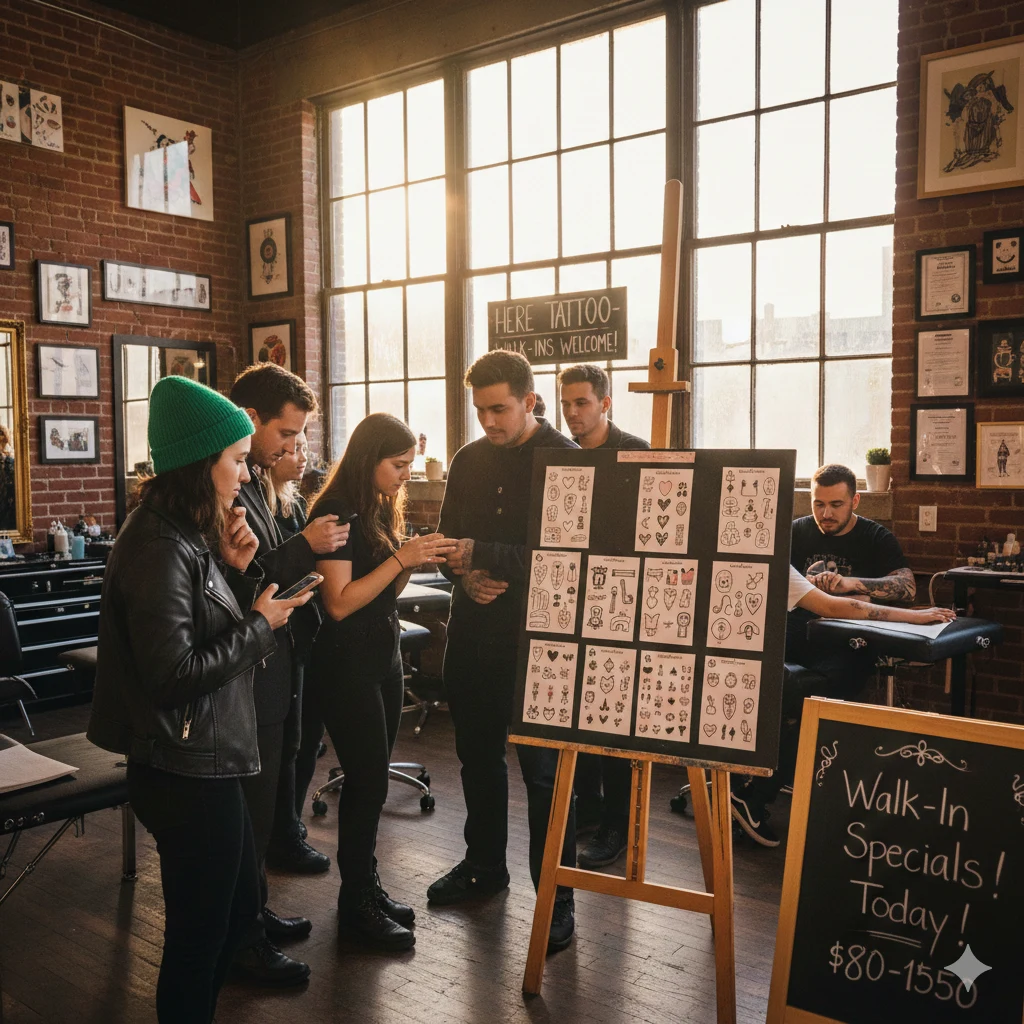
Flash designs—pre-drawn artwork displayed in the shop—represent the most cost-effective walk-in option. These pieces are priced as fixed rates rather than hourly because the artist has already invested design time. A small flash tattoo might cost $100-200, while the same size custom piece could run $150-300 depending on complexity and required drawing time.
Hourly rates for walk-in custom work mirror appointment pricing at most reputable studios. Professional tattoo artists in Brooklyn typically charge $150-250 per hour regardless of whether you booked ahead or walked in. The difference isn't in the rate itself but in how efficiently the session progresses without prior consultation.
Size and placement significantly impact walk-in pricing. Small pieces under 2 inches that fit on wrists, fingers, or behind ears often qualify for shop minimums. Medium designs spanning 3-5 inches typically cost $200-400. Larger work exceeding 6 inches usually requires appointments because walk-in time slots can't accommodate multi-hour sessions.
Color adds 20-30% to walk-in tattoo costs compared to black ink. A simple black outline flash design might cost $120, while the same design with color shading runs $150-180. This increase reflects additional time for color mixing, multiple needle changes, and more complex application techniques.
Walk-In vs. Appointment Pricing Comparison
The pricing gap between walk-ins and appointments narrows significantly for custom work but widens for flash designs. Understanding these differences helps you choose the most cost-effective booking method for your specific tattoo needs.
Flash tattoos during walk-in hours cost 15-25% less than requesting the same design as a custom appointment. A flash piece priced at $150 as a walk-in might cost $180-200 if you book it as an appointment because the artist allocates consultation time and treats it as custom work rather than quick flash execution.
Custom designs cost the same whether you walk in or book ahead at most professional studios. An artist charging $200 per hour maintains that rate regardless of booking method. The real difference emerges in total session cost—walk-ins without prior consultation may require additional time for design discussion, potentially adding 15-30 minutes to your session.
Appointment deposits typically range from $50-100 and apply toward your final tattoo cost. Walk-ins require no deposit but also offer no guaranteed time slot. If you're flexible on timing, walk-ins eliminate the upfront deposit requirement, though you'll pay the full amount on service day.
Rush fees occasionally apply to walk-ins requesting custom work during busy periods. Some studios charge an additional 10-20% when walk-in clients need immediate service that disrupts the artist's schedule. This practice varies by shop—many Brooklyn tattoo artists avoid rush fees entirely, maintaining standard rates for all clients.
Multi-session projects always favor appointments over walk-ins for cost efficiency. Large pieces requiring 6+ hours get broken into multiple sessions with consistent pricing and planning. Walking in for each session without appointments creates scheduling gaps that extend project timelines and may result in inconsistent pricing if different artists work on your piece.
Package deals and loyalty discounts typically apply only to appointment-based work. Studios offering reduced rates for multiple sessions or returning clients structure these promotions around scheduled appointments where they can plan artist availability and project timelines. Walk-in clients rarely access these cost-saving programs.
Factors That Affect Walk-In Tattoo Costs
Multiple variables beyond basic size and design complexity influence walk-in tattoo pricing. Understanding these factors helps you anticipate actual costs and avoid surprise charges at checkout.
Artist experience level creates the most significant pricing variation in walk-in tattoos. Junior artists or apprentices completing their training may charge $80-120 per hour for walk-ins, while established artists with 10+ years experience command $200-300 per hour. The skill difference justifies the cost gap—experienced artists work faster, make fewer mistakes, and deliver more consistent results.
Time of day and day of week impact walk-in availability and sometimes pricing. Weekend walk-in slots fill quickly at popular studios, and some shops implement weekend surcharges of 10-15% during peak hours. Weekday afternoon walk-ins often provide better value and shorter wait times, with some studios offering weekday specials on flash designs.
Shop location dramatically affects walk-in rates. Brooklyn tattoo studios in high-rent neighborhoods like Williamsburg or DUMBO charge 20-40% more than shops in less trendy areas, even for identical work quality. A simple walk-in tattoo costing $150 in Bushwick might run $200-250 in prime Williamsburg locations due to overhead costs.
Design modification requests during walk-in sessions add time and cost. If you select a flash design but want size changes, color alterations, or element additions, expect to pay custom rates rather than flash pricing. These modifications transform a quick flash piece into custom work requiring additional artist time and creativity.
Body placement complexity influences walk-in pricing even for simple designs. Tattoos on difficult areas like ribs, hands, feet, or behind ears require more precision and client pain management, often adding 15-20% to base costs. A design costing $150 on your forearm might run $175-200 on your ribcage due to technical difficulty.
Skin condition and previous tattoo coverage affect pricing and feasibility for walk-ins. Cover-up work requires more ink, time, and artistic skill than fresh skin tattoos, typically costing 30-50% more. Heavily scarred skin or areas with significant sun damage may require additional sessions or specialized techniques that increase costs beyond standard walk-in rates.
When Walk-Ins Actually Save Money
Strategic timing and design choices make walk-in tattoos genuinely more affordable than appointments in specific scenarios. Knowing when to walk in versus when to book ahead maximizes your tattoo budget.
Flash sales and walk-in specials offer the deepest discounts on tattoo work. Many Brooklyn studios run Friday the 13th promotions with $13-50 flash tattoos, or holiday specials featuring discounted pre-designed work. These events exclusively serve walk-in clients and can save 50-70% compared to custom appointment pricing.
Last-minute cancellations create walk-in opportunities at reduced rates. When appointment clients cancel within 24-48 hours, some artists offer the open slot to walk-ins at discounted rates rather than losing income. Following your preferred studio on social media helps you catch these same-day openings, which may come with 15-25% discounts.
Simple, small designs from existing flash sheets provide the most consistent walk-in savings. A tiny heart, star, or symbol from the shop's flash collection costs less as a walk-in because zero design time is required. These pieces run $80-150 depending on size, compared to $150-250 for similar-sized custom work requiring consultation and drawing.
Multiple people getting matching tattoos during one walk-in session sometimes qualify for group discounts. Studios may reduce per-person costs by 10-20% when 3+ people get identical or coordinated designs during the same walk-in visit. This works best for simple designs that the artist can execute quickly and repeatedly.
Apprentice or junior artist walk-in hours offer quality work at reduced rates. Many shops designate specific days when newer artists take walk-ins at 30-50% below standard rates. These artists work under supervision and deliver solid results on simpler designs while building their portfolios and client base.
Off-peak walk-in times—typically Tuesday through Thursday afternoons—sometimes feature informal discounts. While not advertised, some artists negotiate slightly lower rates during slow periods to keep busy. Building rapport with your local studio and visiting during quiet hours can unlock these unofficial savings.
Hidden Costs of Walk-In Tattoos
Walk-in tattoos carry potential additional expenses that aren't immediately obvious when comparing base prices to appointments. These hidden costs can eliminate apparent savings if you're not prepared.
Wait time represents an invisible cost of walk-in tattoos. Arriving at a busy studio might mean waiting 2-4 hours before an artist becomes available. If you're taking time off work or paying for parking, these delays add real costs that scheduled appointments avoid through guaranteed time slots.
Limited design revision opportunities during walk-in sessions can lead to settling for less-than-ideal results. Appointment clients typically get multiple design revisions before the tattoo session, ensuring complete satisfaction. Walk-in clients often choose from available flash or make quick decisions on custom work, potentially requiring future cover-ups or additions that cost more than getting it right initially.
Touch-up policies differ between walk-ins and appointments at some studios. Appointment clients may receive free touch-ups within 30-60 days, while walk-in clients pay for touch-up sessions. A $150 walk-in tattoo requiring a $75 touch-up costs more than a $200 appointment with included touch-ups.
Impulse decision regret leads to removal or cover-up costs that dwarf initial savings. Laser tattoo removal costs $200-500 per session, with most tattoos requiring 6-10 sessions for complete removal. A $100 walk-in tattoo you later regret can cost $1,200-5,000 to remove—far exceeding what you'd pay for a well-planned appointment tattoo you love.
Aftercare product purchases add $20-40 to walk-in costs if you're unprepared. Appointment clients receive aftercare instructions in advance and can purchase supplies beforehand. Walk-in clients often buy marked-up aftercare products at the studio because they didn't plan ahead, adding unnecessary costs to their tattoo investment.
Tipping expectations remain the same for walk-ins as appointments—15-20% of the total cost. A $150 walk-in tattoo requires a $22-30 tip, which some clients forget to budget for when comparing walk-in versus appointment pricing. This tip represents a significant portion of any perceived savings from walk-in discounts.
Quality Considerations for Walk-In Tattoos
Price differences between walk-ins and appointments sometimes reflect quality variations rather than pure cost savings. Understanding these quality factors prevents choosing cheaper options that compromise your tattoo's long-term appearance.
Design customization limitations with walk-ins directly impact tattoo uniqueness and personal meaning. Flash designs are pre-drawn and often tattooed on multiple clients, reducing the personal significance that makes tattoos meaningful. Custom appointment work creates one-of-a-kind designs that reflect your specific story and style preferences.
Consultation depth affects design placement and sizing decisions that impact how your tattoo ages. Appointment consultations allow artists to assess your body's natural contours, discuss how designs will flow with your anatomy, and plan for future additions. Walk-in consultations happen quickly, potentially missing these crucial considerations that affect long-term satisfaction.
Artist-client relationship building happens more naturally through appointment processes. Getting to know your artist through consultation calls or meetings helps ensure style compatibility and communication comfort. Walk-in sessions offer minimal relationship building, which matters more for larger or more personal tattoo projects.
Design complexity limitations during walk-in sessions affect technical execution quality. Artists can't perform their best work on complex designs without preparation time. A detailed portrait or intricate geometric piece requires reference gathering, stencil preparation, and mental planning that walk-in timeframes don't accommodate.
Sterilization and safety standards remain consistent between walk-ins and appointments at reputable studios. Professional tattoo shops maintain identical health protocols regardless of booking method. However, shops offering suspiciously cheap walk-in rates may cut corners on safety—a risk never worth taking for minor cost savings.
Portfolio review opportunities before walk-ins are limited compared to appointment booking. When scheduling appointments, you can thoroughly review artist portfolios, request specific artists, and ensure style compatibility. Walk-in clients often work with whoever's available, potentially getting an artist whose style doesn't match their vision.
How to Get the Best Walk-In Value
Maximizing walk-in tattoo value requires strategic planning and smart decision-making. These approaches help you save money without compromising quality or satisfaction.
Research studio walk-in policies and pricing before visiting. Call ahead or check websites to understand shop minimums, flash pricing, and walk-in availability. Some Brooklyn studios accept walk-ins only during specific hours or days, while others welcome them anytime. Knowing these details prevents wasted trips and helps you plan around the best value times.
Bring reference images and clear design ideas even for walk-in sessions. While you won't get extensive consultation time, arriving with visual references helps artists understand your vision quickly. This preparation reduces design time and ensures better results within walk-in timeframe constraints.
Visit during off-peak hours for shorter waits and potentially better pricing. Tuesday through Thursday afternoons typically see the lightest walk-in traffic at most studios. Artists have more time to discuss your design, and some may offer informal discounts during slow periods to stay busy.
Choose flash designs that genuinely appeal to you rather than settling for available options. Flash tattoos cost less, but only if you actually love the design. Settling for a cheap flash piece you don't love leads to regret and eventual cover-up costs that exceed what you'd pay for custom work you're excited about.
Build relationships with local studios through multiple walk-in visits. Becoming a regular client—even through walk-ins—helps you access better time slots, occasional discounts, and priority service during busy periods. Artists remember clients who tip well and are pleasant to work with, often providing better value over time.
Combine walk-in visits with appointment booking for larger projects. Get a small walk-in tattoo to test an artist's work quality and communication style before committing to a large custom piece. This approach costs less than booking a full appointment with an unfamiliar artist whose work might not meet your expectations.
Ask about walk-in specials, promotions, or slow-day discounts directly. Many studios run unadvertised specials or offer flexibility on pricing during quiet periods. Politely asking "Do you have any walk-in specials today?" or "Is there any flexibility on pricing for this design?" sometimes unlocks savings that aren't publicly posted.
Brooklyn Walk-In Tattoo Pricing Landscape
Brooklyn's diverse tattoo scene creates significant pricing variation for walk-in work across neighborhoods and studio types. Understanding local market rates helps you identify fair pricing and avoid overpaying.
Williamsburg and DUMBO studios charge premium walk-in rates reflecting high rent and trendy locations. Shop minimums in these areas typically start at $150-200, with hourly rates reaching $250-350 for experienced artists. These studios often focus on custom appointment work, treating walk-ins as secondary business with limited availability.
Bushwick and Bed-Stuy neighborhoods offer more affordable walk-in options without sacrificing quality. Shop minimums in these areas range from $80-120, with hourly rates of $150-200 for skilled artists. These studios often welcome walk-in business and maintain more flexible scheduling for same-day clients.
Park Slope and Carroll Gardens studios balance mid-range pricing with family-friendly atmospheres. Walk-in minimums typically run $100-150, with hourly rates of $175-225. These shops often specialize in fine-line work and smaller designs that suit walk-in sessions well.
Downtown Brooklyn and Brooklyn Heights studios cater to professional clientele with polished environments and corresponding pricing. Walk-in minimums start at $120-180, reflecting the corporate client base and premium location costs. These studios emphasize appointment scheduling but accommodate walk-ins during gaps.
Coney Island and southern Brooklyn shops provide the most budget-friendly walk-in options. Shop minimums may start as low as $60-80, though quality varies significantly. Thorough research and portfolio review become essential when considering these lower-priced options to ensure safety and skill standards.
Seasonal pricing fluctuations affect Brooklyn walk-in availability and costs. Summer months see increased walk-in traffic as people prepare for beach season, sometimes leading to longer waits or weekend surcharges. Winter months often feature slower traffic and occasional promotions to maintain steady business.
Making the Walk-In vs. Appointment Decision
Choosing between walk-in and appointment booking depends on your specific tattoo goals, timeline, and budget priorities. This decision framework helps you select the most appropriate and cost-effective approach.
Choose walk-ins for small, simple designs under 2 inches that don't require extensive customization. Flash pieces, basic symbols, small text, or minimal line work suit walk-in sessions perfectly. These designs take 30-60 minutes, fit within typical walk-in time slots, and cost less than scheduling formal appointments for quick work.
Book appointments for custom designs requiring artist input and creative development. Original artwork, portraits, detailed scenes, or pieces incorporating personal symbolism need consultation time and design refinement that walk-in sessions can't provide. The appointment process ensures you get exactly what you envision rather than settling for quick approximations.
Select walk-ins when you're flexible on timing and artist selection. If you're comfortable working with whoever's available and can wait during busy periods, walk-ins offer spontaneity and potential cost savings. This approach works well for travelers visiting Brooklyn who want a souvenir tattoo without advance planning.
Schedule appointments when specific artist style or expertise matters. If you've researched artists and found someone whose portfolio perfectly matches your vision, book an appointment to guarantee working with that person. Walk-ins typically mean working with whoever has availability, which may not be your preferred artist.
Use walk-ins for testing studios and artists before larger commitments. Getting a small walk-in piece lets you experience a studio's cleanliness, professionalism, and artist skill before booking a major custom project. This trial run costs less than discovering mid-appointment that a studio doesn't meet your standards.
Choose appointments for body placements requiring extensive planning. Tattoos on ribs, backs, thighs, or other large areas need careful design sizing and placement consideration. Appointment consultations allow artists to assess your body's contours and plan designs that flow naturally with your anatomy.
Conclusion
Walk-in tattoos offer genuine cost savings for small, simple designs and flash work, but custom pieces typically cost the same whether you walk in or book ahead. The real value of walk-ins comes from reduced consultation time, access to flash specials, and flexibility for spontaneous decisions—not necessarily lower base prices.
Smart walk-in decisions balance cost considerations with quality expectations and long-term satisfaction. Choosing flash designs you genuinely love, visiting during off-peak hours, and researching studio reputations helps you maximize value without compromising safety or results. The cheapest option isn't always the best investment when you're getting permanent body art.
At Here Tattoo in Brooklyn, we welcome both walk-in clients and scheduled appointments with transparent pricing and consistent quality standards. Whether you're ready for a spontaneous flash piece or planning a custom design, our experienced artists provide professional guidance to help you make the best decision for your tattoo goals and budget. Visit us to discuss your ideas and discover how we can bring your vision to life with exceptional craftsmanship and fair pricing.
Frequently Asked Questions
Do walk-in tattoos cost less than appointments?
Walk-in tattoos cost less only for flash designs and small simple pieces. Custom work maintains the same hourly rates whether you walk in or book ahead, typically $150-250 per hour at professional studios. Flash pieces may save 15-25% compared to requesting the same design as custom appointment work.
What's the average cost of a walk-in tattoo?
The average walk-in tattoo costs $100-200 for small designs under 2 inches. Shop minimums range from $80-150 regardless of size, while medium pieces spanning 3-5 inches typically cost $200-400. Larger work usually requires appointments because walk-in time slots can't accommodate multi-hour sessions.
Can I negotiate walk-in tattoo prices?
Most professional studios maintain fixed pricing for walk-ins, but some flexibility exists during slow periods. Politely asking about specials or discounts may unlock 10-15% savings on quiet weekdays. However, reputable artists rarely negotiate significantly because their rates reflect skill level, experience, and overhead costs.
Do I need to tip for walk-in tattoos?
Yes, tipping 15-20% applies to walk-in tattoos just like appointments. For a $150 walk-in piece, plan to tip $22-30. Tips compensate artists for their skill and service quality regardless of booking method. Bring extra cash beyond your tattoo cost to ensure you can tip appropriately.
Are walk-in tattoos lower quality than appointments?
Walk-in tattoo quality matches appointments when you choose appropriate designs for the format. Simple flash work and small pieces execute beautifully as walk-ins. However, complex custom designs requiring extensive planning produce better results through appointments with proper consultation time and design development.
How long do I wait for walk-in tattoos?
Walk-in wait times range from 30 minutes to 4 hours depending on studio traffic and day of week. Weekends see the longest waits, while Tuesday through Thursday afternoons typically offer the shortest. Calling ahead to check current wait times helps you plan accordingly and avoid extended delays.
Do walk-in tattoos include free touch-ups?
Touch-up policies vary by studio—some include free touch-ups for walk-ins within 30-60 days, while others charge for all touch-up sessions. Ask about touch-up policies before getting your walk-in tattoo to understand total potential costs. Reputable studios typically offer at least one complimentary touch-up regardless of booking method.