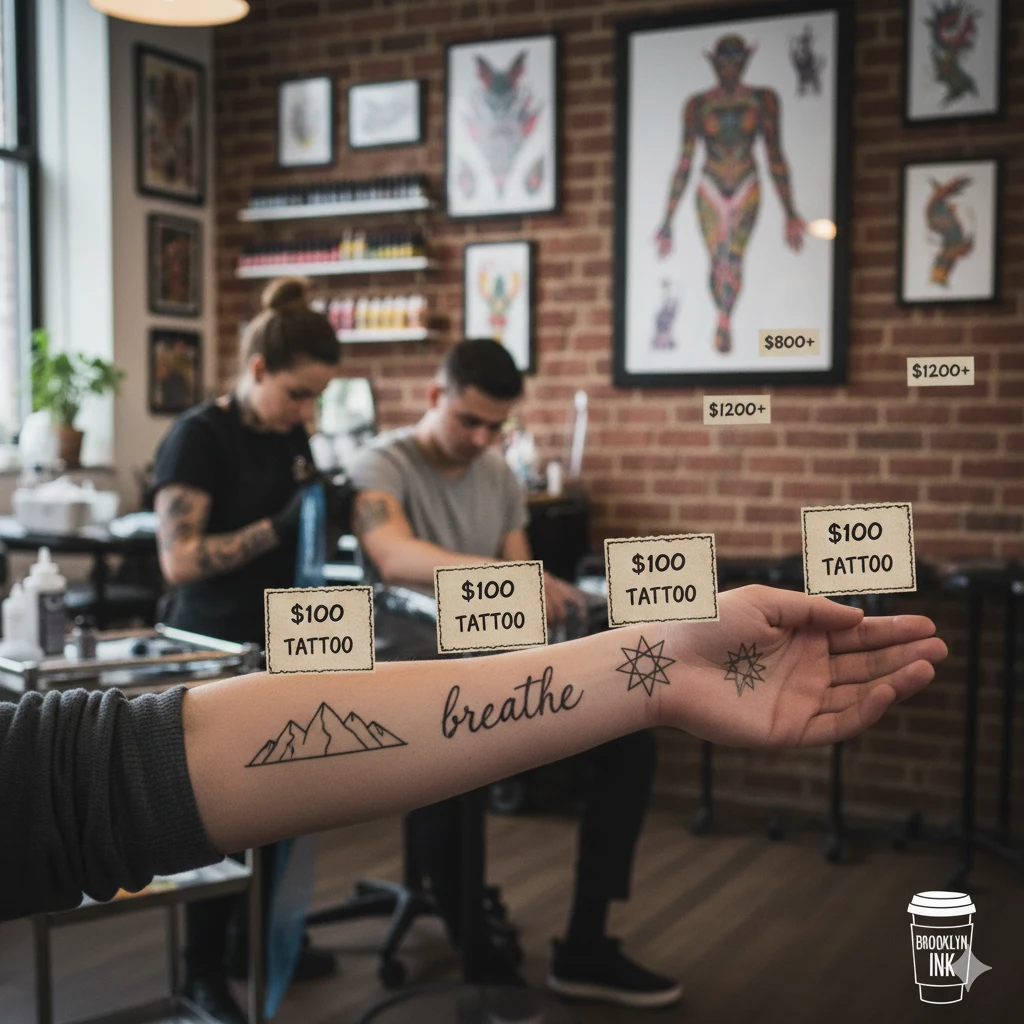
A $100 tattoo typically measures between 2 to 4 inches, roughly the size of a credit card or smaller. This budget usually covers simple designs with minimal detail, basic linework, and limited shading—think small symbols, words, or single-element illustrations placed on areas like the wrist, ankle, or behind the ear.
Understanding tattoo pricing helps you set realistic expectations and communicate effectively with your artist. Size isn't the only factor—complexity, color, artist experience, and studio location all influence the final cost.
This guide breaks down exactly what $100 gets you in tattoo size, how different factors affect pricing, what design styles work best at this price point, and how to collaborate with your artist to create something meaningful within your budget.
Understanding Tattoo Pricing Basics

Tattoo pricing operates differently than most services because you're paying for both artistic skill and permanent body modification. Most professional studios set rates based on time, complexity, and the artist's experience level rather than a simple per-square-inch calculation.
Shop minimums form the foundation of tattoo pricing. According to industry data from Tattoodo, most reputable studios charge between $80 and $150 as a minimum, regardless of size. This minimum covers the artist's time for setup, design consultation, stencil preparation, equipment sterilization, and the actual tattooing process. Even a tiny dot requires the same sanitary protocols and professional attention as a larger piece.
Hourly rates vary significantly by location and artist reputation. Entry-level artists in smaller cities might charge $100 to $150 per hour, while established artists in metropolitan areas like Brooklyn command $200 to $300+ per hour. The American Academy of Micropigmentation reports that geographic location creates price variations of up to 200% for identical work.
Artist experience directly impacts both quality and cost. An apprentice might offer lower rates but has less technical skill with line consistency, depth control, and design adaptation to body contours. A seasoned professional brings years of experience ensuring your tattoo heals properly and ages well on skin—worth the investment for permanent body art.
Studio overhead affects pricing too. Professional shops invest in medical-grade sterilization equipment, premium ink brands, liability insurance, and comfortable client spaces. These operational costs get factored into rates, but they also ensure your safety and the longevity of your tattoo.
What Size Tattoo Does $100 Actually Get You?
At the $100 price point, you're looking at tattoos in the 2 to 4-inch range—roughly the dimensions of a business card, a large postage stamp, or about three fingers wide. This size works perfectly for wrists, ankles, behind the ear, side of the finger, or small placements on the forearm or shoulder blade.
Design complexity matters more than raw dimensions. A simple 3-inch outline of a heart or star might take 30 to 45 minutes and fit comfortably within a $100 budget. However, a 2-inch geometric mandala with intricate linework and dot shading could require 90 minutes and cost $150 to $200 because of the technical precision involved.
Single-element designs maximize your budget. Think one flower, a small animal silhouette, a meaningful word or short phrase, basic symbols like arrows or moons, or simple line art. These designs translate well at smaller sizes and maintain clarity as they age on skin.
Text-based tattoos offer excellent value at this price point. A single word in a clean font typically measures 2 to 3 inches and takes 20 to 40 minutes to complete. Short phrases might stretch to 4 to 5 inches depending on letter size and font complexity. Script fonts with flourishes require more time than simple sans-serif styles.
Placement affects how size translates visually. A 3-inch tattoo on your inner wrist appears larger than the same size on your shoulder blade because of the body's proportions and how often you see that area. Curved body parts like ribs or ankles may require size adjustments to follow natural contours properly.
Color adds cost beyond the base size. Most $100 budgets accommodate black ink only. Adding even one color typically increases time by 25% to 40% because artists must change needles, mix inks, and layer carefully for proper saturation. A simple black outline stays within budget; that same design with color fill likely exceeds it.
Factors That Affect Tattoo Size for Your Budget
Design detail density determines how much artists can accomplish within your budget. Fine line work, intricate patterns, realistic shading, and geometric precision all require more time per square inch than bold, simple designs. A minimalist line drawing of a mountain range might take 45 minutes at 3 inches wide, while a detailed landscape with shading in the same dimensions could require 2 hours.
Body placement influences both size possibilities and pricing. Flat, easy-to-reach areas like outer forearms, calves, and shoulder blades allow artists to work efficiently. Sensitive or awkward positions—ribs, hands, feet, behind the knee—require more careful, slower work. Some artists charge premium rates for painful or technically challenging placements regardless of size.
Skin texture and condition affect tattooing speed. Heavily sun-damaged skin, scarring, or areas with stretch marks require extra care and potentially multiple passes to achieve solid ink saturation. Younger, well-moisturized skin accepts ink more readily, allowing artists to work faster and potentially fit more detail into your budget.
Artist specialization impacts what you can get for $100. An artist who specializes in fine line micro-tattoos might create a more detailed 2-inch piece than a traditional artist who works primarily in bold, large-scale designs. Matching your desired style to an artist's strengths ensures you get the best possible result for your investment.
Custom design work versus flash art changes the equation. Flash designs—pre-drawn options displayed in the shop—are priced to move quickly and often represent the best value for budget-conscious clients. Custom designs require consultation time, sketching, revisions, and artistic development, which may push a small tattoo beyond the $100 threshold even if the actual tattooing time fits the budget.
Studio policies on small tattoos vary. Some high-end studios won't book appointments under their minimum, which might be $150 to $200. Others welcome smaller pieces, especially for building client relationships. Walk-in availability versus scheduled appointments can also affect pricing—some shops offer walk-in discounts during slow periods.
Design Styles That Work Best at This Price Point
Minimalist line art delivers maximum impact within a $100 budget. Single continuous line drawings, simple geometric shapes, and clean symbolic imagery require less time while maintaining visual clarity. These designs age gracefully because they don't rely on fine details that might blur over time.
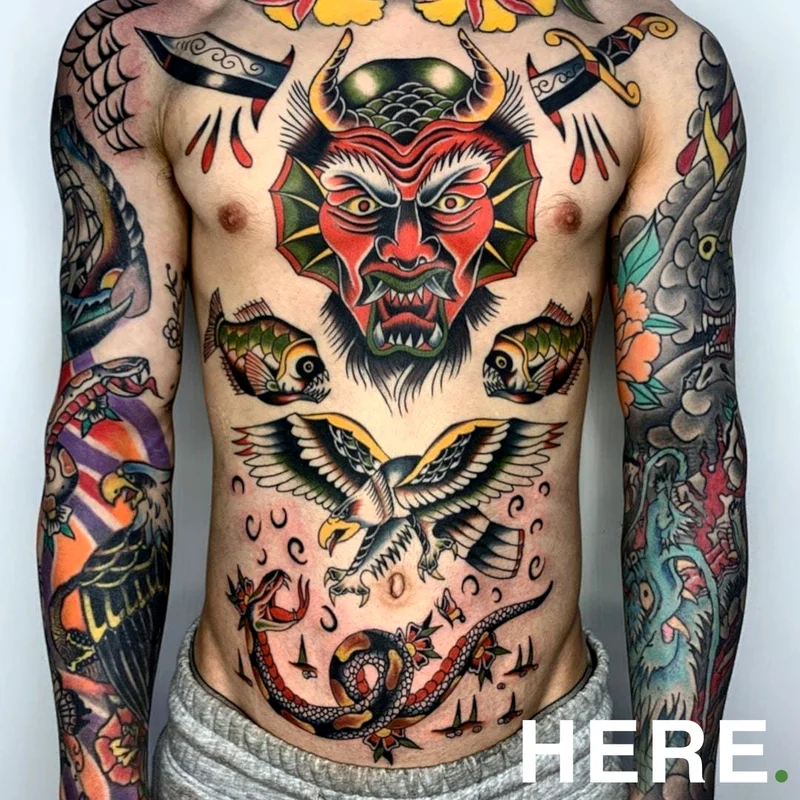
Traditional American style elements work excellently at smaller sizes. Classic imagery like anchors, swallows, roses, daggers, and hearts were designed to read clearly at any scale. The bold outlines and limited color palette of traditional tattooing translate well to budget-friendly sizes while maintaining the style's iconic look.
Small symbolic tattoos offer personal meaning without complexity. Astrological symbols, elemental icons, simple animals, religious symbols, and cultural emblems typically feature clean lines and recognizable shapes that work perfectly in the 2 to 4-inch range. These designs communicate clearly without requiring extensive detail work.
Silhouette designs maximize visual impact with minimal tattooing time. Animal profiles, skyline outlines, plant silhouettes, and human figure shadows create striking images using solid black fill or simple outlines. The lack of internal detail keeps these designs within budget while maintaining strong visual presence.
Single-word text tattoos provide excellent value. Meaningful words, names, dates, or short mantras in clean fonts require straightforward execution. Sans-serif fonts like Helvetica or simple script styles take less time than ornate calligraphy or fonts with heavy embellishment. Letter sizing between 0.5 and 1 inch height ensures readability as the tattoo ages.
Dotwork and stippling styles can work at this price point for simple designs. While complex dotwork mandalas exceed most $100 budgets, simple dotwork accents, small stippled images, or basic geometric patterns with dot shading fit within the timeframe. The key is keeping the overall design simple even if the technique appears detailed.
Small botanical illustrations suit budget constraints when kept simple. A single flower, leaf, branch, or succulent with basic linework and minimal shading creates an elegant tattoo without extensive time investment. Avoid complex arrangements or highly detailed petals that require precision shading.
How to Maximize Value Within Your Budget
Come prepared with clear reference images and design ideas. The more direction you provide, the less time your artist spends on consultation and concept development. Collect examples of styles you like, specific elements you want included, and clear notes about sizing and placement preferences. This preparation keeps your appointment focused on tattooing rather than design exploration.
Choose placement strategically for both visibility and tattoo longevity. Areas with minimal sun exposure, less friction from clothing, and stable skin (not prone to significant weight fluctuation) help your tattoo maintain its appearance for years. Outer forearms, upper arms, calves, and shoulder blades offer excellent longevity for small tattoos.
Be flexible with design complexity. If you fall in love with an intricate design that exceeds your budget, ask your artist about simplifying elements. Removing background details, reducing color, or scaling back shading can bring a design within reach while maintaining its essential character.
Book during off-peak times when possible. Some studios offer discounts for weekday appointments, morning slots, or slower seasons. Friday the 13th specials, flash sales, and apprentice artist opportunities can stretch your budget further while still delivering quality work from supervised, developing artists.
Trust your artist's expertise on sizing and placement. Experienced tattooers understand how designs translate to skin and age over time. If an artist suggests sizing up slightly or adjusting placement for better flow with your body's contours, consider their advice seriously. A slightly more expensive tattoo that looks better and lasts longer provides better value than forcing a design into an inadequate budget.
Consider the tattoo as a starting point for future work. A well-executed small piece can be expanded later into a larger composition. Many clients start with a simple element and add to it over time as budget allows, building a cohesive larger piece through multiple sessions.
Prioritize artist quality over bargain hunting. A $100 tattoo from a skilled professional in a clean studio provides infinitely better value than a $50 tattoo from an inexperienced scratcher working in questionable conditions. Tattoo removal costs $200 to $500 per session according to the American Society for Dermatologic Surgery, making a cheap bad tattoo far more expensive long-term than investing properly from the start.
What to Discuss With Your Tattoo Artist
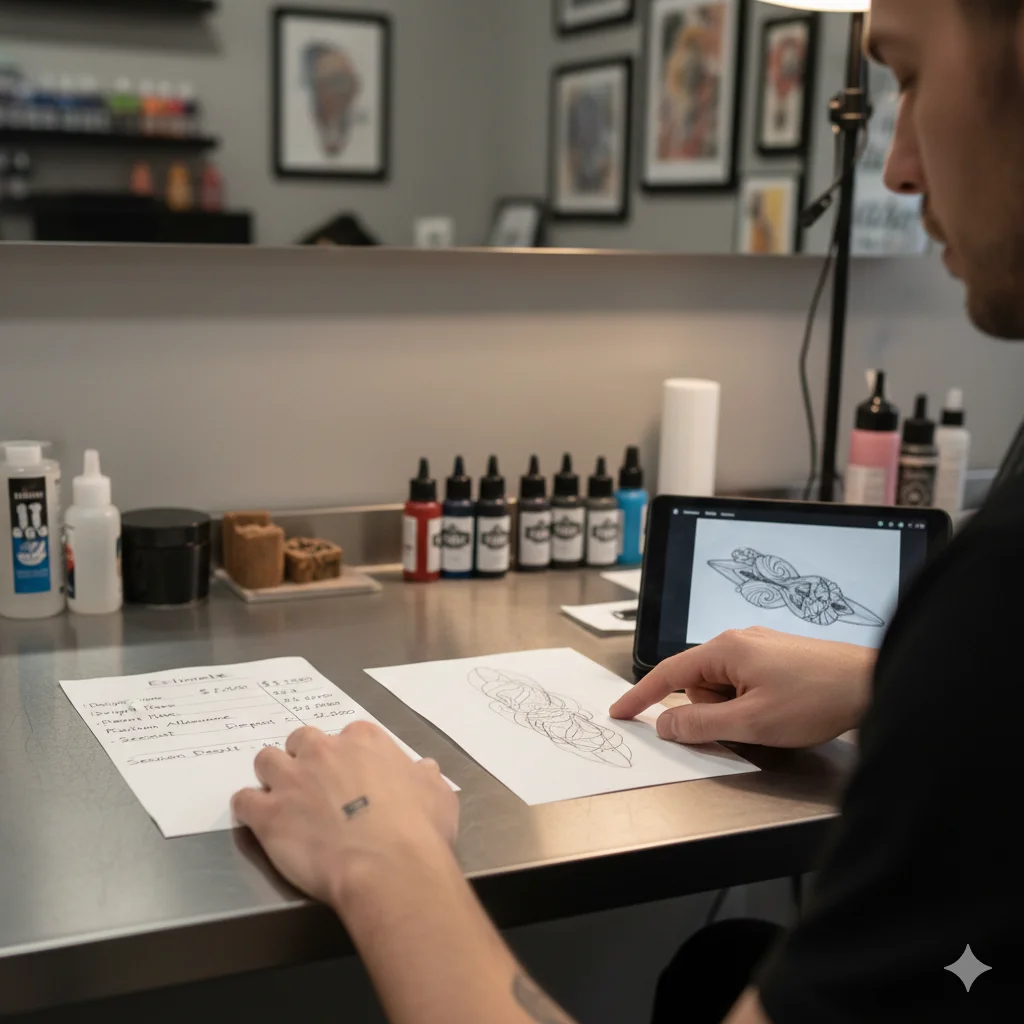
Start your consultation by clearly stating your budget upfront. Professional artists appreciate transparency and can immediately guide you toward realistic options. Explain that you have $100 to spend and ask what size and style options work within that constraint. This honesty prevents awkward conversations after design work is complete.
Bring your design ideas but remain open to professional input. Show your reference images and explain what appeals to you about each one. Ask which elements translate best to your budget and body placement. Experienced artists can identify which aspects of your vision work at smaller scales and which require more investment.
Discuss placement options and how they affect sizing. Ask your artist to show you approximate sizing on your body using a measuring tool or transfer paper. What looks perfect in your mind might appear too small or awkwardly proportioned in reality. Seeing the actual dimensions on your skin helps make informed decisions.
Clarify what's included in the quoted price. Does the estimate cover design time, stencil creation, and touch-ups? Most reputable artists include one free touch-up session within 4 to 6 weeks to address any healing issues. Understanding what's included prevents surprise costs.
Ask about the artist's experience with your desired style. Review their portfolio specifically for work similar to what you want. An artist who excels at bold traditional work might not be the best choice for delicate fine line designs, and vice versa. Matching style expertise to your vision ensures better results.
Inquire about design timeline and revision policies. Some artists create custom designs in advance and allow revisions; others draw directly on the day of your appointment. Understanding the process helps you prepare mentally and ensures you're comfortable with the final design before needle touches skin.
Discuss aftercare requirements and products. Proper healing directly impacts how your tattoo looks long-term. Ask what aftercare products the artist recommends, how long the healing process takes, and what activities to avoid. Some studios include aftercare products in their pricing; others require separate purchase.
Common Misconceptions About Tattoo Pricing
Many people assume tattoo pricing works like printing—cost per square inch. In reality, a tiny intricate design often costs more than a larger simple one because complexity and time matter more than dimensions. A 1-inch realistic portrait requires more skill and time than a 4-inch simple outline, making it more expensive despite being smaller.
The belief that "you get what you pay for" isn't always accurate at the extreme budget end. While quality generally correlates with price, a $100 tattoo from a professional studio delivers far better results than a $50 kitchen tattoo. The difference between $100 and $150 might be minimal in quality terms—you're often paying for artist demand and location rather than dramatically better work.
Some clients think all artists charge the same rates within a city. Artist pricing varies enormously based on experience, demand, specialization, and studio overhead. Two shops on the same Brooklyn block might have $100 per hour rate differences for comparable quality work. Research and consultations help you find the right match for your budget and style preferences.
The misconception that small tattoos are "easy" and should cost less than shop minimums ignores the reality of tattoo work. Every tattoo requires the same setup, sterilization, and professional attention regardless of size. Artists can't pay rent, buy supplies, and maintain studios by charging $30 for tiny tattoos that take the same preparation as larger pieces.
Many first-time clients don't realize tipping is standard practice. Plan to tip your artist 15% to 20% on top of the tattoo cost, just like restaurant service. If your budget is truly limited to $100 total, communicate this upfront so the artist can design accordingly, leaving room for an appropriate tip within your total budget.
The belief that touch-ups are always free stems from misunderstanding studio policies. Most artists include one complimentary touch-up for healing issues—areas where ink didn't take properly due to skin response. However, touch-ups needed because you didn't follow aftercare instructions, or design additions and changes, typically cost extra.
Preparing for Your $100 Tattoo Appointment
Schedule a consultation before your tattoo appointment when possible. Many studios offer brief free consultations where you can discuss ideas, see the space, meet the artist, and get accurate pricing. This preview prevents day-of surprises and ensures you're comfortable with the artist and environment.
Eat a substantial meal 1 to 2 hours before your appointment. Low blood sugar can cause dizziness, nausea, and increased pain sensitivity during tattooing. Protein-rich foods provide sustained energy for your body's stress response to the tattoo process.
Hydrate well in the days leading up to your appointment. Well-hydrated skin accepts ink more readily and heals better. Aim for 8 to 10 glasses of water daily for at least three days before your session. Avoid alcohol for 24 hours prior—it thins blood and can cause excessive bleeding during tattooing.
Wear appropriate clothing that provides easy access to your tattoo placement. If you're getting a shoulder tattoo, wear a tank top or loose shirt you can remove. For ankle tattoos, wear shorts or pants that roll up easily. Comfortable clothing you don't mind getting ink on makes the experience more pleasant.
Bring entertainment for potential waiting time. Even with appointments, studios sometimes run behind schedule. A book, headphones with music, or your phone with a charged battery helps pass time comfortably. Some clients find listening to music during the tattoo helps them relax.
Arrive with clean skin at the placement area. Shower before your appointment and avoid applying lotions, oils, or makeup to the area being tattooed. Artists will clean the area again, but arriving with fresh skin shows respect for their workspace and your own health.
Bring your ID and payment method. Most studios require government-issued identification proving you're 18 or older. Confirm accepted payment methods in advance—some shops are cash-only, others accept cards, and many add processing fees for credit card payments. Having exact payment ready streamlines the checkout process.
Conclusion
A $100 budget opens the door to meaningful, professionally executed tattoo work when you understand how sizing, complexity, and artist expertise interact. That 2 to 4-inch range accommodates countless design possibilities—from minimalist symbols to elegant text, simple illustrations to bold traditional elements—each offering permanent personal expression that reflects your story and style.
Smart preparation maximizes your investment: clear communication with your artist, realistic expectations about size and detail, strategic placement choices, and flexibility with design elements all contribute to a tattoo you'll love for years. The relationship between budget and outcome isn't about limitation—it's about focused creativity and collaboration with a skilled professional who understands how to deliver quality work at every price point.
At Here Tattoo in Brooklyn, we specialize in helping clients create meaningful custom designs that honor both their vision and their budget. Our experienced artists excel at translating ideas into tattoo-ready designs that work beautifully at any size, guiding you through placement, style, and detail decisions that ensure your $100 investment becomes a piece of permanent art you're proud to wear. Ready to start your tattoo journey? Book a consultation with us and let's bring your idea to life.
Frequently Asked Questions
Can I get a colored tattoo for $100?
Most $100 budgets accommodate black ink only, as color adds 25% to 40% more time for ink changes and layering. A small single-color accent might fit within budget, but full color designs typically start at $150 to $200 for the 2 to 4-inch size range.
How long does a $100 tattoo take to complete?
Most $100 tattoos take 30 minutes to 1 hour of actual tattooing time, depending on design complexity and artist speed. Factor in additional time for stencil placement, setup, and aftercare instructions—expect to spend 60 to 90 minutes total at the studio.
Will a small tattoo hurt less than a large one?
Pain correlates more with placement than size—bony areas, thin skin, and nerve-dense locations hurt regardless of tattoo dimensions. A small wrist tattoo might be more painful than a larger shoulder piece. However, shorter session time means less overall discomfort duration.
Can I bring my own design for a $100 tattoo?
Yes, but understand that artists may need to modify your design for technical feasibility, proper sizing, or to ensure it ages well on skin. Complex custom designs requiring significant redrawing might exceed a $100 budget once design time is factored in.
How do I know if a $100 tattoo price is fair?
Research average rates in your area and compare shop minimums across multiple studios. Fair pricing includes proper sterilization, quality ink, experienced artists, and clean professional environments. Significantly below-market rates often indicate compromised safety or inexperienced artists.
Should I tip on a $100 tattoo?
Yes, standard tipping is 15% to 20% of the tattoo cost, so plan for $15 to $20 additional. If your total budget is truly $100 including tip, communicate this upfront so your artist can design accordingly, keeping the tattoo cost around $80 to $85.
Can I add to a $100 tattoo later?
Absolutely—many clients start with a simple element and expand it over time as budget allows. Discuss your long-term vision with your artist during the initial consultation so they can position and design the first piece to accommodate future additions seamlessly.