A $1500 tattoo typically ranges from a half-sleeve (6-8 inches) to a full back piece (12-18 inches), depending on design complexity, color work, and your artist's hourly rate. Most professional tattoo artists in Brooklyn charge between $150-$250 per hour, meaning your budget covers roughly 6-10 hours of work. This timeframe allows for detailed shading, intricate line work, and custom design elements that transform a simple concept into a meaningful piece of wearable art.
Understanding tattoo pricing helps you set realistic expectations and communicate effectively with your artist. Size isn't the only factor—placement, color saturation, and design intricacy all influence the final cost and dimensions of your piece.
This guide breaks down exactly what $1500 buys in terms of tattoo size, explores how different factors affect pricing, and helps you maximize your investment through smart design choices and artist collaboration.
Understanding Tattoo Pricing Fundamentals
Tattoo pricing operates on multiple variables that extend beyond simple measurements. Professional artists calculate costs based on time investment, skill level, design complexity, and studio overhead rather than square inches alone.
Hourly rates form the foundation of most tattoo pricing structures. According to Tattoodo's 2024 industry survey, established artists in major metropolitan areas charge between $150-$300 per hour, with Brooklyn artists averaging $200 per hour. This rate reflects years of training, equipment costs, and artistic expertise that ensure safe, high-quality results.
Shop minimums typically range from $80-$150 for small pieces, covering setup time, sterilization, and basic materials. These minimums apply regardless of actual tattoo size, making them less economical for tiny designs. Your $1500 budget far exceeds minimum thresholds, positioning you for substantial custom work.
Design complexity dramatically impacts pricing beyond basic size calculations. A simple 6-inch tribal band might take 2-3 hours, while a 6-inch photorealistic portrait could require 8-10 hours due to detailed shading, color blending, and precision line work. Artists price based on execution time rather than final dimensions.
Geographic location influences rates significantly. Brooklyn's competitive tattoo scene commands premium pricing compared to smaller markets, but also provides access to world-class artists with diverse specializations. Your $1500 investment in a Brooklyn studio like Here Tattoo ensures professional-grade work with proper licensing, sterilization protocols, and artistic expertise.
Artist experience level creates substantial rate variations. Apprentices might charge $75-$100 hourly, while internationally recognized artists command $300-$500 per hour. Mid-career professionals with 5-10 years experience—the sweet spot for quality and value—typically charge $150-$250 hourly, making them ideal for maximizing your budget.
Size Ranges for a $1500 Budget
Your $1500 budget opens diverse size possibilities depending on design approach and artist selection. Understanding typical size ranges helps you envision realistic outcomes and plan placement strategically.
Quarter-sleeve tattoos (shoulder to mid-bicep) represent the most common $1500 project. These pieces typically measure 8-10 inches in length and wrap partially around the arm, requiring 6-8 hours of work. This timeframe accommodates moderate detail, selective color work, and cohesive composition that flows with arm anatomy. Quarter-sleeves work exceptionally well for nature scenes, geometric patterns, or symbolic imagery that benefits from vertical composition.
Half-sleeve designs (shoulder to elbow) push the upper boundary of $1500 budgets when executed with moderate complexity. Covering 10-12 inches of arm length, half-sleeves demand 8-12 hours for completion, potentially requiring multiple sessions. Simpler designs with bold lines and minimal shading fit comfortably within budget, while photorealistic or heavily detailed work might exceed $1500. Half-sleeves provide substantial visual impact and allow for narrative storytelling across the composition.
Thigh pieces offer generous canvas space within your budget parameters. The thigh's broad, relatively flat surface accommodates 8-12 inch designs with 6-10 hours of work, depending on detail level. This placement suits larger florals, animals, mandalas, or illustrative scenes that benefit from expansive space. Thigh tattoos remain easily concealable while providing impressive scale for complex imagery.
Back pieces vary dramatically in scope and pricing. A centered upper back design (8-10 inches) fits comfortably within $1500, while full back coverage exceeds this budget significantly. Partial back pieces focusing on shoulder blade areas or lower back regions maximize your investment by utilizing natural body contours to enhance composition. These placements work beautifully for symmetrical designs, wings, or spiritual imagery.
Ribcage tattoos deliver substantial size despite challenging placement. The ribcage's length allows for 10-14 inch vertical designs within your budget, though session length may be limited by pain tolerance. Artists often schedule multiple shorter sessions for rib pieces, with your $1500 covering the complete project across 2-3 appointments. This placement suits script, florals, or flowing designs that complement body curves.
Chest pieces provide prominent placement with moderate size potential. Centered chest designs spanning 6-8 inches or side chest pieces extending 8-10 inches vertically both align with $1500 budgets. Chest tattoos require careful consideration of body symmetry and natural muscle contours, making them ideal for bold, impactful imagery like animals, portraits, or geometric patterns.
Calf tattoos maximize visible surface area within budget constraints. The calf's cylindrical shape accommodates 8-12 inch designs that wrap partially or fully around the leg, requiring 6-10 hours depending on detail. This placement works exceptionally well for traditional Japanese imagery, nature scenes, or illustrative work that benefits from the leg's natural taper.
Factors That Affect Final Tattoo Size
Multiple variables beyond budget determine your tattoo's ultimate dimensions and visual impact. Understanding these factors helps you collaborate effectively with your artist and make informed design decisions.
Color complexity significantly impacts size-to-budget ratios. Black and gray tattoos progress faster than full-color pieces, as color work requires multiple passes, careful blending, and longer healing between layers. A black and gray design might yield 20-30% more coverage than an equivalent full-color piece within the same budget. Color saturation, gradient work, and vibrant hues demand additional time for proper execution and longevity.
Line work style influences completion speed and final size. Bold, traditional lines progress quickly, allowing larger coverage areas within your timeframe. Fine line work, dotwork, or intricate geometric patterns require meticulous precision and slower execution, reducing overall size potential. Single-needle techniques, while creating delicate results, take considerably longer than standard liner needles.
Shading techniques dramatically affect project duration. Solid black packing, smooth gradients, and realistic shading all demand different time investments. Photorealistic portraits require extensive shading work to achieve depth and dimension, potentially limiting size compared to simpler illustrative styles. Stipple shading and dotwork techniques, while visually striking, progress more slowly than traditional shading methods.
Design intricacy determines execution speed regardless of overall size. A 6-inch mandala with thousands of precise details might require equal time to a 12-inch simple tribal design. Intricate patterns, fine details, and complex compositions demand careful attention and slower progress. Conversely, bold, simplified designs with clean lines and minimal detail allow for faster execution and larger coverage.
Body placement affects both pain tolerance and technical difficulty. Areas with thin skin, proximity to bone, or frequent movement (hands, feet, ribs) require more breaks and careful execution, extending session time. Flatter, well-padded areas like thighs or upper arms allow for longer, more productive sessions, maximizing size potential within your budget.
Skin condition and texture influence tattooing speed. Smooth, well-hydrated skin accepts ink more readily than dry, textured, or scarred skin. Previous tattoos, stretch marks, or skin irregularities require additional time for proper coverage and blending. Discussing skin considerations during consultation helps your artist estimate realistic timeframes.
Artist working speed varies based on individual style and technique. Some artists work quickly with bold, confident strokes, while others take a more methodical, detail-oriented approach. Neither method is superior—both produce excellent results with different time investments. Understanding your chosen artist's typical pace helps set accurate size expectations.
Design Styles and Size Considerations
Different tattoo styles carry inherent size requirements and time investments that directly impact what your $1500 budget achieves. Selecting a style aligned with your budget maximizes both size and quality.
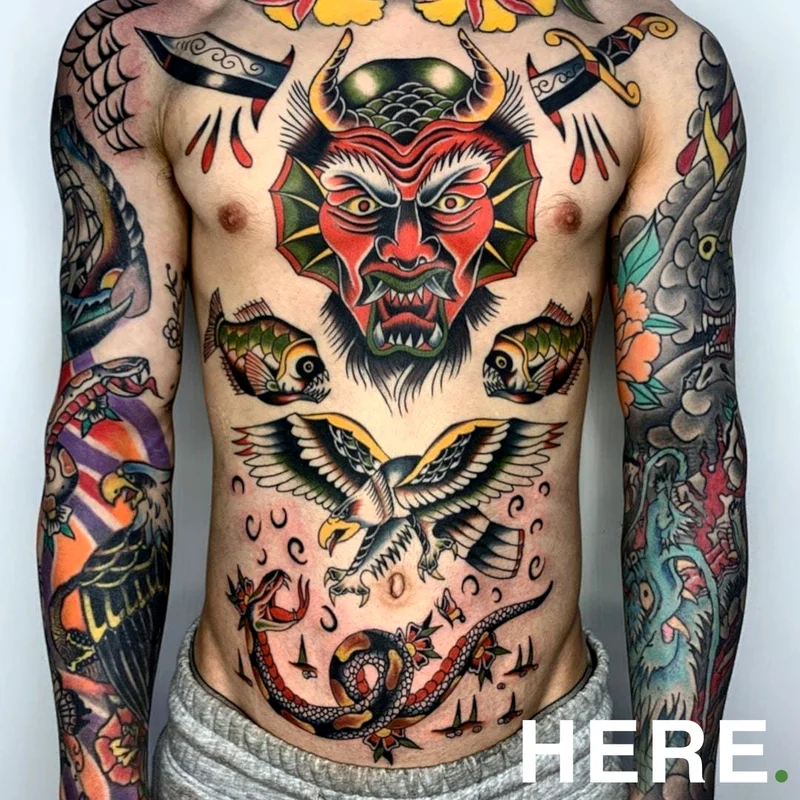
Traditional American tattoos optimize budget-to-size ratios exceptionally well. Bold outlines, solid color fills, and simplified shading allow for faster execution and larger coverage. A traditional half-sleeve might require only 6-8 hours, fitting comfortably within your budget while delivering bold, timeless imagery. Traditional style's emphasis on readability and strong composition ensures your piece maintains visual impact at any size.
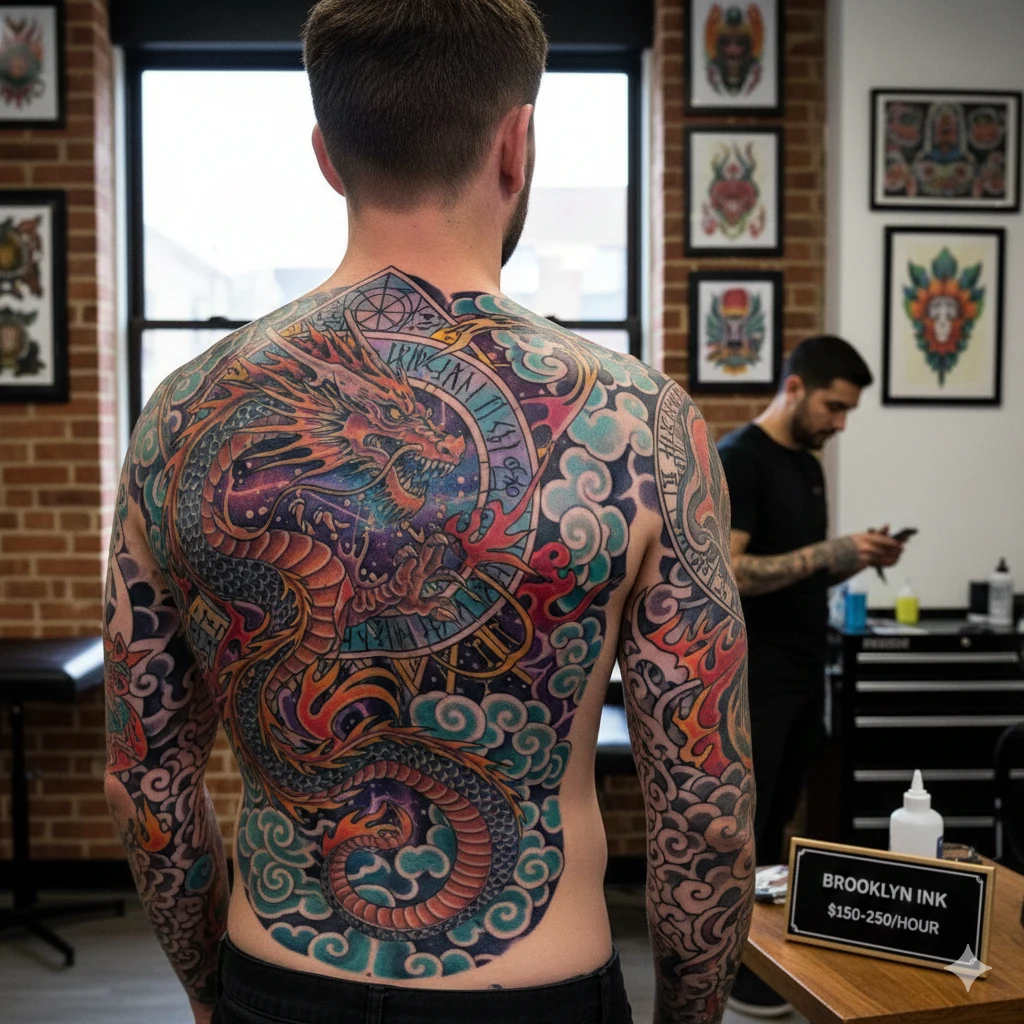
Japanese traditional (Irezumi) work demands substantial time investment due to intricate backgrounds, detailed scales, and complex compositions. While incredibly striking, authentic Japanese pieces typically require 10-15 hours for half-sleeve coverage, potentially exceeding your budget. Modified Japanese-inspired designs with simplified backgrounds or selective detail can fit within $1500 while maintaining stylistic integrity.
Realism and photorealism represent the most time-intensive styles. Achieving lifelike portraits, animals, or scenes requires extensive shading, color blending, and fine detail work. A realistic portrait might measure only 4-6 inches within your budget, while the same investment in traditional style could yield 10-12 inches. Realism prioritizes quality and detail over size, making it ideal when impact matters more than coverage.
Geometric and dotwork styles fall mid-range for time investment. Precise lines, perfect symmetry, and thousands of individual dots create stunning visual effects but progress more slowly than bold traditional work. A geometric sleeve might require 8-12 hours for half-arm coverage, positioning it at the upper end of your budget. These styles reward patience with unique, mathematically precise results.
Blackwork and illustrative styles offer excellent size potential within budget constraints. Solid black sections, bold linework, and graphic compositions progress efficiently while creating dramatic visual impact. A blackwork half-sleeve typically requires 6-10 hours, fitting comfortably within $1500 while delivering bold, contemporary aesthetics.
Watercolor tattoos require careful consideration of longevity and execution time. While visually striking, watercolor techniques demand precise color blending and often benefit from black outlines for long-term clarity. These pieces progress at moderate speed, yielding medium-sized designs within your budget. Discussing watercolor longevity with your artist ensures realistic expectations.
Fine line and single-needle work creates delicate, detailed results with smaller size potential. The precision required for ultra-fine lines limits coverage area within your timeframe. A fine line piece might measure 4-8 inches within budget, perfect for minimalist designs, delicate florals, or subtle symbolism. This style prioritizes elegance and subtlety over bold impact.
Placement Options for Maximum Impact
Strategic placement selection maximizes your tattoo's visual impact, longevity, and integration with your body's natural contours. Different locations offer unique advantages within your $1500 budget.
Upper arm placement provides optimal visibility and canvas quality. The outer bicep and shoulder area offer relatively flat, well-padded surfaces that accommodate 8-12 inch designs comfortably. This location experiences minimal aging effects, maintains ink vibrancy well, and allows for easy concealment when needed. Upper arm tattoos suit both bold traditional work and detailed illustrative pieces, making them versatile for various styles.
Forearm tattoos deliver maximum visibility with moderate size potential. The forearm's length accommodates 8-10 inch vertical designs or 6-8 inch pieces with partial wrap. This placement works exceptionally well for script, geometric patterns, or illustrative work you want to display regularly. Forearm skin accepts ink well and ages gracefully with proper care, ensuring long-term quality.
Thigh placement maximizes canvas space while maintaining concealment options. The thigh's broad, flat surface accommodates large-scale designs (10-14 inches) within your budget, perfect for florals, animals, or complex compositions. This location experiences less sun exposure than arms, helping preserve color vibrancy. Thigh tattoos suit clients wanting substantial work without workplace visibility concerns.
Back placement offers the body's largest continuous canvas. While full back pieces exceed $1500 budgets, strategic partial back tattoos maximize impact. Upper back pieces between shoulder blades (8-10 inches) or side back panels (10-12 inches) fit within budget while utilizing natural body symmetry. Back tattoos remain easily concealable and provide excellent surfaces for detailed work.
Chest tattoos create bold, personal statements with moderate size potential. Centered chest pieces (6-8 inches) or side chest panels (8-10 inches) align with your budget while delivering prominent placement. Chest skin varies in sensitivity, potentially requiring multiple sessions, but offers excellent ink retention and minimal aging effects. This placement suits meaningful imagery you want close to your heart.
Calf tattoos balance visibility, size, and pain tolerance effectively. The calf's cylindrical shape accommodates 8-12 inch designs that wrap partially around the leg, creating dynamic compositions visible from multiple angles. Calf placement experiences moderate aging and sun exposure, requiring standard aftercare for longevity. This location works beautifully for traditional Japanese work, nature scenes, or illustrative pieces.
Ribcage placement delivers substantial size despite challenging execution. The ribcage's length allows for 10-14 inch vertical designs, though pain sensitivity may necessitate multiple shorter sessions. Your $1500 budget typically covers complete ribcage projects across 2-3 appointments. This placement suits flowing designs, script, or imagery that complements body curves, though it requires commitment due to discomfort levels.
Maximizing Your $1500 Investment
Strategic planning and informed decision-making ensure your budget delivers optimal results in both size and quality. These approaches help you maximize value without compromising artistic integrity.
Prioritize design simplification over size expansion. A well-executed 8-inch piece with clean lines and thoughtful composition outperforms a rushed 12-inch piece with compromised details. Working with your artist to refine concepts, eliminate unnecessary elements, and focus on core imagery ensures your budget supports quality execution. Simplified designs also age better, maintaining clarity and impact over decades.
Schedule multiple sessions strategically rather than rushing completion. Breaking larger projects into 2-3 sessions allows for proper healing between stages, better color saturation, and reduced fatigue for both you and your artist. Many artists offer slight discounts for committed multi-session projects, potentially extending your budget's reach. Multiple sessions also provide opportunities to refine design elements between appointments.
Choose placement that optimizes artist efficiency. Flatter, easily accessible areas like upper arms, thighs, or backs allow for longer, more productive sessions compared to challenging locations like ribs or feet. Maximizing productive session time increases coverage within your budget while reducing overall project duration.
Consider black and gray over full color for size maximization. Black and gray work progresses 20-30% faster than equivalent color pieces, yielding larger coverage within the same timeframe. Modern black and gray techniques achieve stunning depth and dimension without color's time investment. You can always add color later if desired, treating the initial piece as a foundation.
Collaborate closely during design development to align vision with budget. Transparent communication about your $1500 limit allows your artist to propose designs optimized for that investment. Experienced artists excel at scaling concepts appropriately, suggesting style modifications, or recommending phased approaches that deliver complete, cohesive results within budget constraints.
Research artist portfolios thoroughly to match style with efficiency. Some artists specialize in bold, quick-executing styles, while others focus on time-intensive detail work. Selecting an artist whose natural style aligns with your budget expectations ensures satisfaction without compromising their artistic approach. Portfolio review reveals typical project scales and completion times.
Avoid common budget-stretching mistakes like last-minute design changes, poor aftercare requiring touch-ups, or requesting excessive detail in small spaces. Design finalization before your appointment, following aftercare instructions meticulously, and trusting your artist's guidance on appropriate detail levels all protect your investment and ensure optimal results.
Session Planning and Time Management
Effective session planning ensures your $1500 budget translates into completed, high-quality work rather than partial projects requiring additional investment. Understanding session dynamics helps set realistic expectations.
Most $1500 tattoos require 6-10 hours of work, typically split across 1-3 sessions. Single-session completion works well for pieces requiring 4-6 hours, allowing for breaks without overnight healing interruptions. Longer projects benefit from multiple sessions, preventing fatigue-related quality decline and allowing proper healing between stages. Your artist recommends session structure based on design complexity and placement.
Session length limitations vary by placement and individual pain tolerance. Most clients comfortably endure 3-4 hour sessions on well-padded areas like arms or thighs. Sensitive locations like ribs or feet may require shorter 2-3 hour sessions with more frequent breaks. Honest communication about pain tolerance helps your artist plan realistic session schedules that maintain quality throughout.
Healing time between sessions typically requires 2-4 weeks minimum. Proper healing ensures the first session's work has settled before adding adjacent elements, preventing ink blowout and maintaining crisp lines. Rushing between sessions compromises quality and potentially wastes your budget on corrections. Planning sessions 3-4 weeks apart provides optimal healing while maintaining project momentum.
Deposit structures protect both artist and client investments. Most studios require $100-$200 deposits when booking, applied toward your final cost. Deposits secure your appointment time and compensate artists for design work if you cancel. Your remaining $1300-$1400 covers actual tattooing time, with final payment due upon completion. Understanding deposit policies prevents budget surprises.
Touch-up policies vary by studio but typically include one complimentary session within 3-6 months. Touch-ups address minor healing inconsistencies, not design changes or additions. Your $1500 budget should account for the initial work only, with touch-ups covering natural healing variations. Proper aftercare minimizes touch-up needs, protecting your investment.
Tipping conventions suggest 15-20% gratuity for excellent service, adding $225-$300 to your total investment. While not mandatory, tips acknowledge your artist's skill and care. Budget planning should account for gratuity separately from the $1500 tattoo cost. Some clients tip per session for multi-appointment projects, while others provide a lump sum upon completion.
Design Complexity vs. Coverage Area
Balancing design intricacy with desired size represents the fundamental trade-off in tattoo budgeting. Understanding this relationship helps you make informed decisions aligned with your priorities.
Intricate designs with fine details, complex shading, and numerous elements require substantially more time per square inch. A 6-inch mandala with thousands of precise geometric elements might demand 8-10 hours, while a 6-inch simple tribal design takes 2-3 hours. Your $1500 budget buys either extensive coverage with simplified designs or moderate coverage with intricate details—rarely both simultaneously.
Photorealistic portraits exemplify maximum complexity with minimum size. Achieving lifelike skin tones, accurate facial features, and dimensional depth requires 8-12 hours for a 4-6 inch portrait. This style prioritizes quality and impact over coverage area, making it ideal when you want a stunning centerpiece rather than extensive coverage. Portrait work demands experienced artists, justifying premium rates within your budget.
Traditional and neo-traditional styles optimize the complexity-coverage balance. Bold outlines, solid color fills, and stylized shading create visually striking results without excessive time investment. These styles allow for 8-12 inch coverage within your budget while maintaining artistic sophistication. Traditional work's emphasis on readability ensures your piece maintains impact as it ages.
Geometric and sacred geometry designs require precision but scale efficiently. While individual elements demand careful execution, repetitive patterns allow artists to establish rhythm and work efficiently. A geometric half-sleeve might require 8-10 hours, fitting within budget while delivering intricate visual complexity. These designs reward patience with mathematically precise, mesmerizing results.
Blackwork and negative space techniques create dramatic impact through bold simplicity. Solid black sections, strategic negative space, and graphic compositions progress quickly while delivering contemporary aesthetics. Blackwork maximizes coverage within your budget, potentially yielding 10-14 inch pieces with strong visual presence. This style suits clients wanting bold statements without extensive detail work.
Illustrative and sketch-style tattoos balance detail with efficiency. Loose linework, selective shading, and artistic interpretation create sophisticated results without photorealistic time investment. These styles accommodate 8-12 inch designs within budget while maintaining artistic depth. Illustrative work offers creative flexibility and unique personal expression.
Combining styles strategically extends budget effectiveness. A central detailed element (portrait, realistic flower) surrounded by simpler supporting elements (geometric patterns, script) balances complexity with coverage. This approach creates focal points while filling space efficiently, maximizing both impact and size within your $1500 investment.
Color vs. Black and Gray Considerations
Color choice significantly impacts both project timeline and final size within your budget. Understanding the practical implications of color work helps you make informed aesthetic decisions.
Full-color tattoos require 25-40% more time than equivalent black and gray pieces. Color application involves multiple passes for saturation, careful blending between hues, and often additional sessions for optimal vibrancy. A color half-sleeve might require 10-12 hours, while the same design in black and gray takes 6-8 hours. This time difference directly affects size potential within your $1500 budget.
Black and gray work offers sophisticated depth through shading techniques alone. Modern black and gray approaches achieve remarkable dimension, texture, and visual interest without color's time investment. Smooth gradients, stipple shading, and strategic contrast create stunning results that age gracefully. Black and gray maximizes coverage within budget while delivering timeless aesthetics.
Selective color application balances impact with efficiency. Adding color to key elements (flower petals, eyes, specific symbols) while maintaining black and gray foundations creates focal points without full-color time investment. This approach extends your budget's reach while incorporating color's emotional impact. Strategic color use guides viewer attention and enhances symbolic meaning.
Color vibrancy maintenance requires ongoing commitment. Colored tattoos fade faster than black and gray work, particularly in sun-exposed areas. Reds, purples, and yellows show fading most noticeably, while blues and blacks maintain vibrancy longer. According to a 2024 study in the Journal of Dermatological Treatment, colored tattoos require touch-ups every 5-7 years to maintain original vibrancy, compared to 10-15 years for black and gray work.
Skin tone influences color visibility and selection. Lighter skin tones showcase full color ranges effectively, while deeper skin tones benefit from high-contrast colors and strategic placement. Experienced artists adjust color palettes based on your skin tone, ensuring optimal visibility and longevity. Consultation discussions should address skin tone considerations for realistic color expectations.
Color healing requires additional care and attention. Colored ink sometimes experiences more inflammation during healing, requiring diligent aftercare. Multiple color layers may necessitate touch-ups for even saturation. Black and gray work typically heals more predictably, with fewer complications. Understanding healing differences helps you prepare appropriate aftercare routines.
Budget allocation for future color additions provides flexibility. Starting with black and gray linework and shading creates a complete, cohesive piece that functions beautifully alone. Adding color later becomes a separate project, allowing you to spread costs over time while building toward your ultimate vision. This phased approach maximizes immediate size while preserving color options.
Working With Your Artist on Size Expectations
Effective artist collaboration ensures your $1500 budget delivers results that meet or exceed expectations. Professional communication and mutual understanding create optimal outcomes.
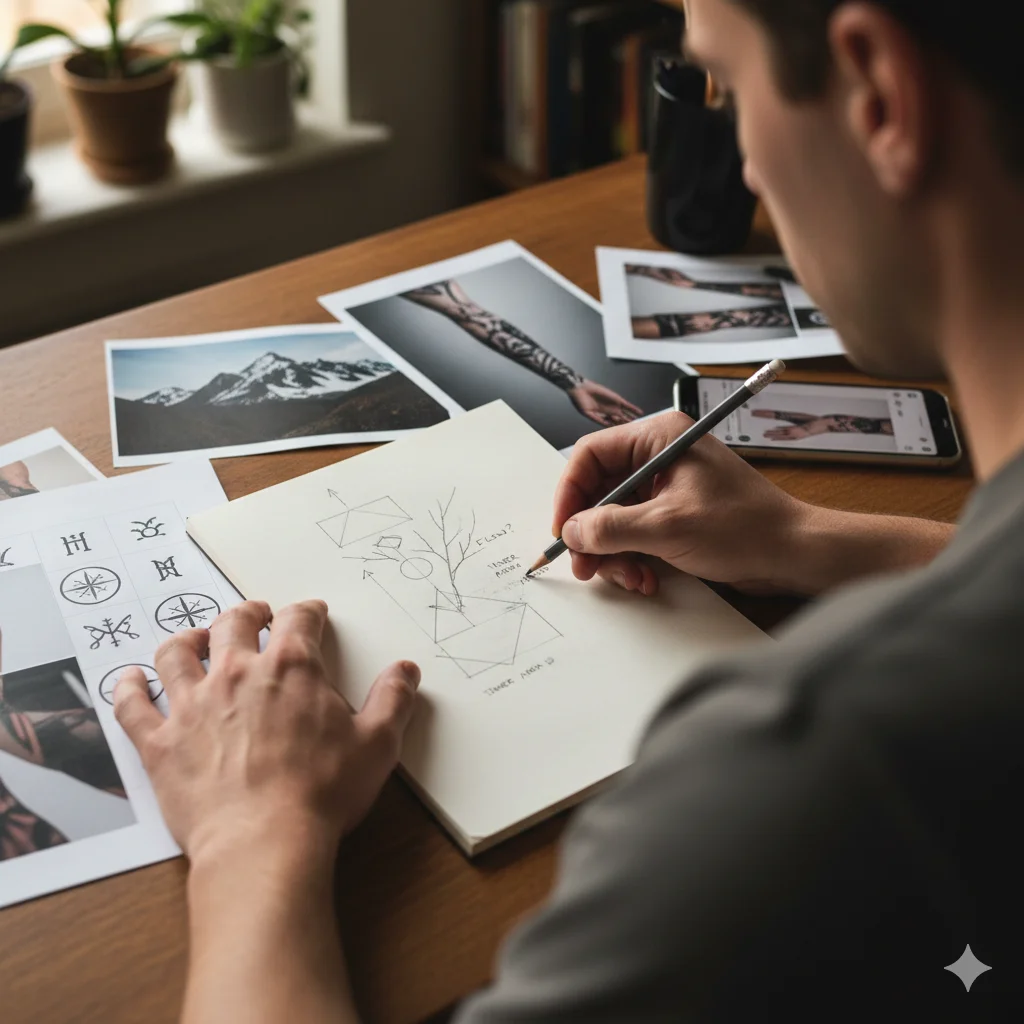
Schedule comprehensive consultations before committing to designs. Quality consultations involve detailed discussions about your vision, budget constraints, placement preferences, and style interests. Bring reference images, describe symbolic meanings, and communicate honestly about your $1500 limit. Experienced artists use this information to propose realistic designs optimized for your investment.
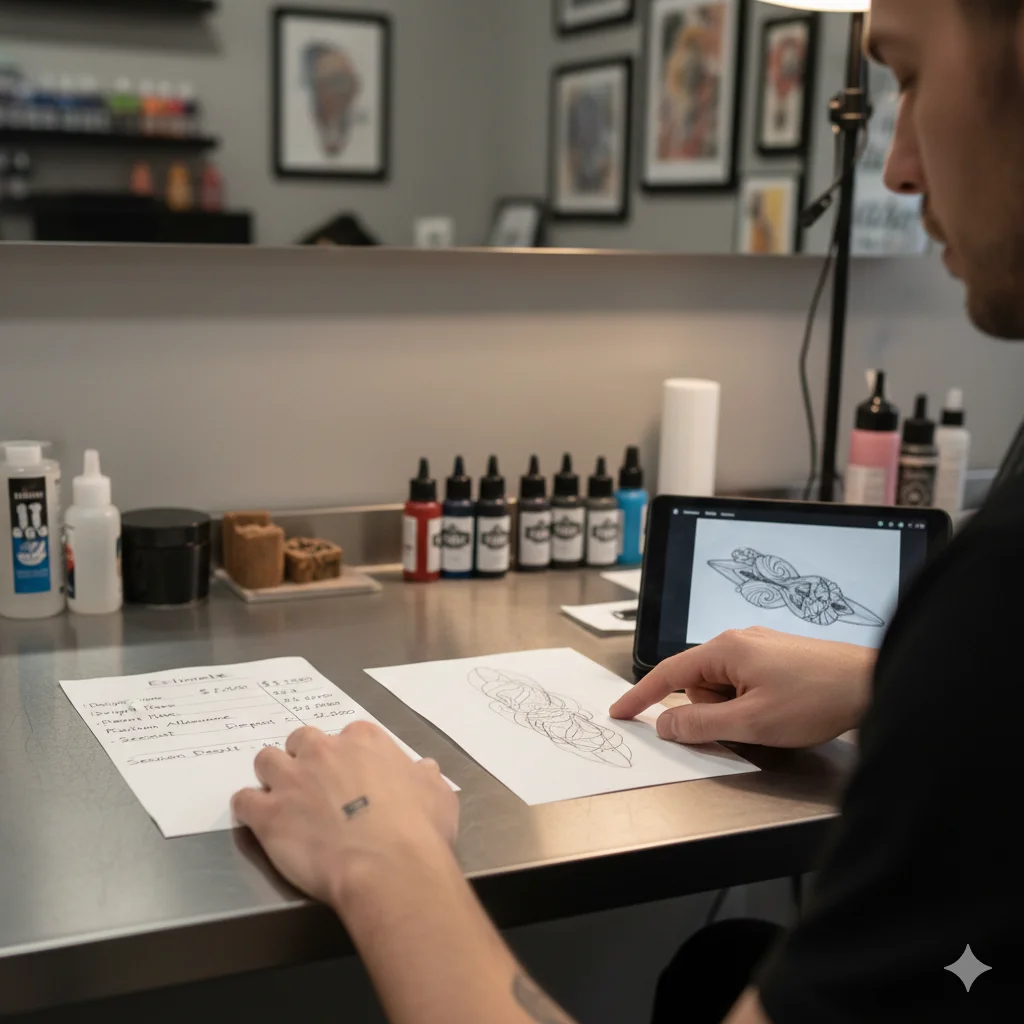
Request size mockups and placement previews during consultation. Many artists provide digital mockups or stencil previews showing actual size and placement on your body. These visualizations prevent disappointment and allow for adjustments before needle touches skin. Seeing your design at actual scale helps confirm size expectations align with reality.
Discuss style modifications that optimize budget efficiency. Your artist might suggest simplifying backgrounds, adjusting color approaches, or modifying details to maximize size within budget. These recommendations stem from experience and technical knowledge, not artistic laziness. Trust your artist's guidance on balancing your vision with practical execution.
Clarify what your $1500 covers explicitly. Confirm whether the quote includes consultation time, design revisions, multiple sessions, and one touch-up. Understanding inclusions prevents budget surprises and ensures transparent transactions. Professional studios provide detailed quotes outlining all costs and services.
Address timeline expectations realistically. If your design requires 12 hours but your budget covers 8, discuss options: simplify the design, plan additional investment, or phase the project. Honest timeline discussions prevent rushed work or incomplete pieces. Quality artists prioritize complete, cohesive results over maximizing immediate revenue.
Review portfolio pieces at similar scales to your project. Examining your artist's previous work at comparable sizes reveals their approach to composition, detail level, and space utilization. Portfolio review builds confidence in their ability to deliver your desired scale and style within budget parameters.
Establish clear communication channels for questions between consultation and appointment. Professional artists welcome questions about design refinements, size concerns, or preparation requirements. Open communication ensures you arrive at your appointment confident and prepared, maximizing productive session time.
Conclusion
Your $1500 tattoo budget opens substantial possibilities, typically yielding half-sleeve coverage, large thigh pieces, or detailed back panels depending on design complexity and style choice. Understanding the interplay between size, detail, color, and placement empowers you to make informed decisions that maximize both coverage and quality. Strategic planning, artist collaboration, and realistic expectations ensure your investment delivers a meaningful piece you'll treasure for life.
The relationship between budget and size isn't purely mathematical—artistic vision, technical execution, and personal meaning matter equally. A well-executed 8-inch piece with thoughtful composition and clean execution outperforms a rushed 12-inch piece every time. Prioritizing quality over quantity, trusting your artist's expertise, and maintaining realistic expectations create optimal outcomes within any budget.
At Here Tattoo in Brooklyn, we specialize in translating your vision into custom designs optimized for your investment. Our experienced artists provide transparent consultations, realistic size expectations, and collaborative design processes that ensure your $1500 delivers exactly what you envision. Ready to explore what your budget can achieve? Schedule your consultation with Here Tattoo today and let's create something extraordinary together.
Frequently Asked Questions
How many hours of tattoo work does $1500 typically buy?
$1500 typically covers 6-10 hours of professional tattoo work, depending on your artist's hourly rate. Brooklyn artists average $150-$250 per hour, meaning your budget provides substantial time for detailed, custom work. Session structure varies by design complexity and placement.
Can I get a full sleeve tattoo for $1500?
A complete full sleeve (shoulder to wrist) typically costs $2000-$4000, exceeding your $1500 budget. However, you can complete a quality half-sleeve (shoulder to elbow) or start a full sleeve with plans to finish later. Discuss phased approaches with your artist for long-term sleeve goals.
Does tattoo placement affect how big my $1500 tattoo can be?
Yes, placement significantly impacts size potential. Easily accessible, flat areas like upper arms or thighs allow for longer, more productive sessions, maximizing coverage. Sensitive areas like ribs or feet require shorter sessions with more breaks, potentially reducing overall size within the same budget.
Will a color tattoo be smaller than black and gray for the same price?
Color tattoos typically yield 20-30% less coverage than black and gray work within the same budget due to additional application time, multiple passes for saturation, and careful color blending. Black and gray work progresses faster while still achieving stunning depth and dimension.
How does design complexity affect my tattoo's final size?
Design complexity dramatically impacts size-to-budget ratios. Intricate details, photorealism, and complex shading require more time per square inch, reducing overall coverage. Simplified designs with bold lines and minimal detail allow for larger coverage within the same timeframe and budget.
Should I get my $1500 tattoo done in one session or multiple sessions?
Projects requiring 6+ hours typically benefit from multiple sessions, preventing fatigue-related quality decline and allowing proper healing between stages. Single sessions work well for 4-6 hour pieces. Your artist recommends optimal session structure based on design complexity, placement, and your pain tolerance.
What's the best tattoo style for maximizing size on a $1500 budget?
Traditional American, neo-traditional, and blackwork styles optimize size-to-budget ratios due to bold lines, solid fills, and efficient execution. These styles allow for larger coverage while maintaining artistic sophistication. Realism and fine line work prioritize detail over size, yielding smaller but highly detailed pieces.