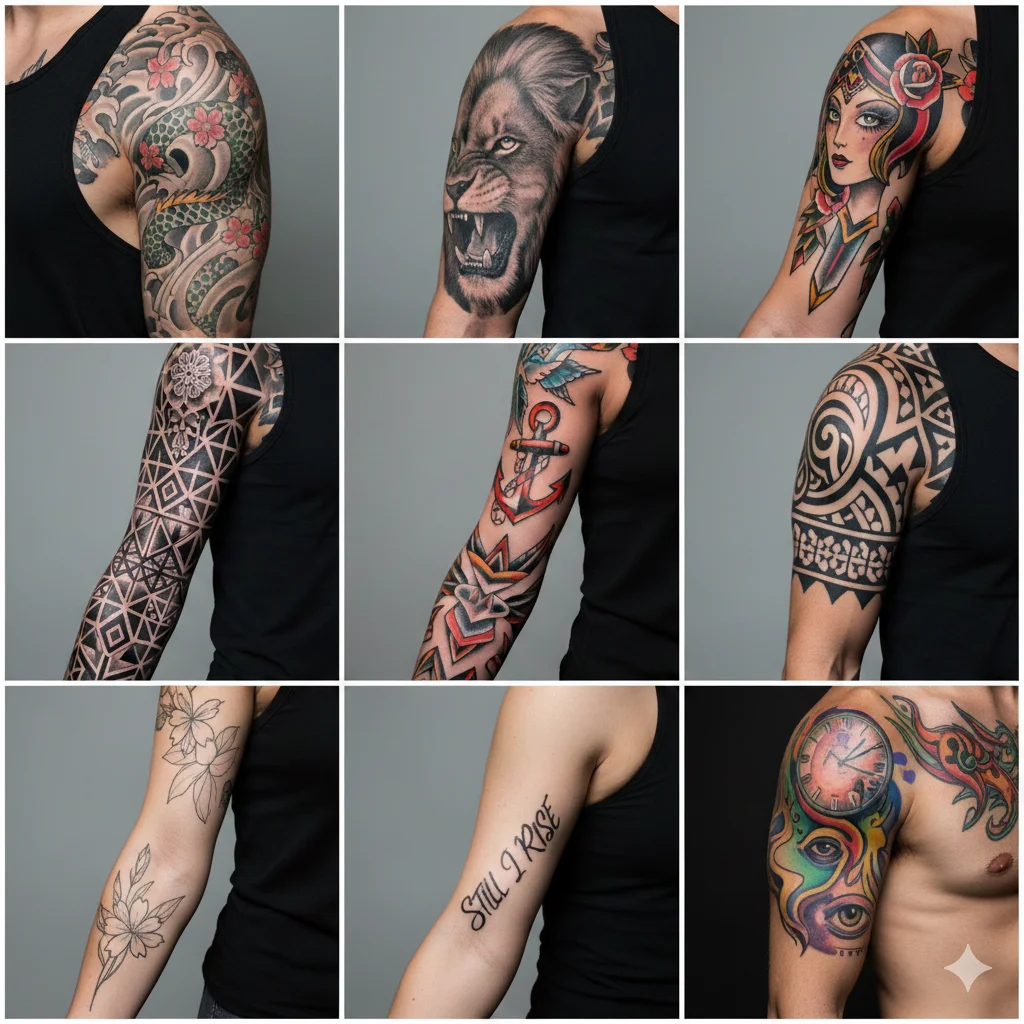
The best tattoo styles for arms include Japanese, realism, neo-traditional, and geometric designs. Each style uses the arm's natural shape differently. Your choice depends on arm placement, skin tone, and long-term goals. Japanese sleeves wrap beautifully around muscle curves. Realism creates striking focal points on flat forearm areas. Traditional styles offer bold readability from any angle.
Choosing the right arm tattoo style matters more than most people realize. The arm moves constantly. It ages visibly. A style that works on paper might distort on skin. Brooklyn clients often ask us which designs will still look sharp in twenty years.
In this blog, we will explain what tattoo style looks best on an arm and how to match designs to your body. You will learn placement strategies, aging considerations, and how to work with an artist effectively.
Tattoo Styles That Visually Perform Best on Arms
Arms offer a unique canvas that suits many tattoo styles. The cylindrical shape creates natural flow for wraparound designs. Flat sections provide clean space for detailed work. Understanding which styles thrive here helps you make confident decisions.
Japanese and Large-Scale Narrative Designs
Japanese tattoos rank among the most popular arm styles worldwide. These designs use flowing water, wind bars, and clouds to connect imagery. Dragons, koi fish, and cherry blossoms wrap naturally around biceps and forearms. The style's background elements fill negative space beautifully.
Large-scale narrative work tells stories across your arm. Scenes unfold as the arm rotates. This creates visual interest from every angle. Japanese masters designed these compositions specifically for body contours centuries ago.
Realism and Black & Grey Imagery
Realistic tattoos create stunning impact on arms. Portraits, animals, and nature scenes benefit from the arm's relatively flat surfaces. Black and grey work ages particularly well on this placement. The style relies on smooth gradients that hold up over time.
Forearms provide excellent real estate for realistic pieces. The skin stays relatively taut here. Detail retention improves compared to areas with more movement. Many Brooklyn clients choose realism for meaningful portrait work.
Neo-Traditional and American Traditional Styles
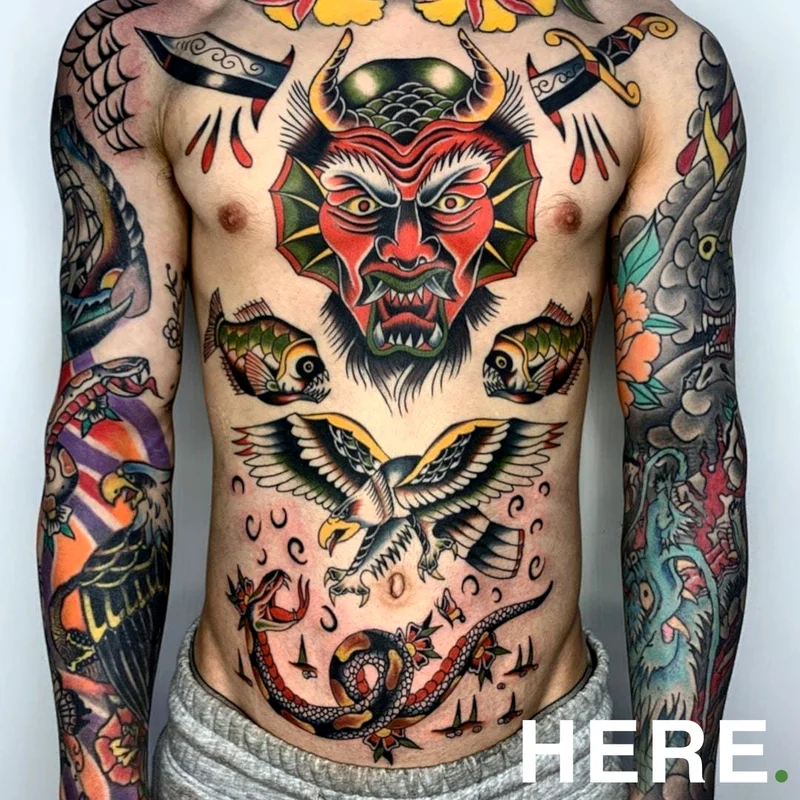
Traditional styles were literally designed for arms. Sailors popularized these bold designs on forearms and biceps. Thick outlines ensure readability at any distance. Saturated colors pop against most skin tones.
Neo-traditional expands on this foundation with more detail. The style adds depth while maintaining bold structure. Both approaches age gracefully because of their strong line work. These designs remain legible for decades.
Blackwork, Tribal, and Geometric Designs
Blackwork creates dramatic contrast on arms. Solid black sections and intricate patterns command attention. Tribal designs follow muscle contours naturally. Geometric work uses the arm's shape to enhance symmetry.
These styles work especially well for clients wanting high-impact visuals. The arm's cylindrical form supports mandala-style designs. Patterns can wrap seamlessly around the limb. Blackwork also covers existing tattoos effectively.
Why the Arm Is One of the Most Versatile Tattoo Placements
Arms remain the most requested tattoo placement for good reasons. The location offers practical benefits that other body parts cannot match. Understanding these advantages helps you maximize your design choices.
Natural Flow and Muscle Structure
Arm muscles create natural guidelines for tattoo placement. The bicep's curve supports rounded compositions. Forearm muscles provide directional flow for elongated designs. Skilled artists use these contours to enhance visual movement.
Muscle definition adds dimension to flat artwork. Shadows and highlights shift as you move. This creates a living quality that static placements lack. Your tattoo becomes part of your body's natural architecture.
Balance of Visibility and Concealment
Arms offer perfect visibility control. Roll up your sleeves to display your work. Wear long sleeves for professional settings. This flexibility matters for Brooklyn clients balancing creative expression with career demands.
Upper arm tattoos hide easily under short sleeves. Forearm pieces show more frequently. You control the narrative based on your daily needs. Few placements offer this practical versatility.
Space for Both Standalone and Expanded Designs
Arms accommodate everything from small symbols to full sleeves. A single meaningful piece works beautifully alone. That same piece can later anchor an entire sleeve composition. The space grows with your tattoo journey.
Many clients start with one forearm design. Years later, they return to build around it. Smart initial placement makes future expansion seamless. We help clients plan for both immediate satisfaction and long-term possibilities.
Upper Arm vs. Forearm Style Considerations
Upper arms and forearms present different design opportunities. Each area has unique characteristics that favor certain styles. Matching your design to the right location improves visual results significantly.
Styles That Benefit From Curvature and Volume
Upper arms wrap around substantial muscle mass. This curvature suits designs meant to be viewed from multiple angles. Japanese work excels here because it was designed for wraparound viewing. Mandalas and circular compositions also thrive.
The bicep's volume adds depth to three-dimensional designs. Skulls, roses, and animal heads gain realistic dimension. Shading techniques create natural shadows that enhance the illusion. Flat designs can look awkward on this curved surface.
Designs That Work Best on Flat, Elongated Areas
Forearms provide flatter, more rectangular canvas space. Script and lettering read clearly here. Realistic portraits maintain proper proportions. Geometric patterns align with the arm's natural lines.
The inner forearm offers the flattest surface on the arm. This makes it ideal for detailed fine-line work. Delicate designs that might distort elsewhere hold their integrity here. Many clients choose this spot for meaningful text or symbols.
Readability From Different Viewing Angles
Consider how others will see your tattoo most often. Outer forearm designs face outward toward viewers. Inner forearm pieces face you primarily. Upper arm work shows when sleeves are short or rolled.
Traditional and neo-traditional styles read well from any distance. Fine-line work requires closer viewing for full appreciation. Bold designs communicate clearly across a room. Subtle pieces reward intimate observation.
Full Sleeve vs. Partial Arm Tattoo Planning
Deciding between full sleeves and partial coverage shapes your entire approach. Each path offers distinct advantages. Understanding the commitment level helps you choose wisely.
Styles That Support Cohesive Sleeve Concepts
Full sleeves require styles that connect naturally. Japanese work uses background elements to unify separate images. Blackwork can flow between focal points seamlessly. Neo-traditional allows varied subjects within a consistent aesthetic.
Cohesive sleeves need planning before the first session. Color palettes should remain consistent throughout. Background textures must flow between sections. We map entire compositions before tattooing begins.
Strong Standalone Styles for Smaller Commitments
Not everyone wants full coverage. Standalone pieces make powerful statements alone. Traditional designs were created as individual works. Realistic portraits function as complete compositions.
Smaller commitments allow style experimentation. Try fine-line work on one piece. Explore blackwork on another. Your arm becomes a gallery of different approaches. Each piece maintains its individual identity.
Planning Designs With Future Expansion in Mind
Smart placement today enables options tomorrow. Leave space around standalone pieces for potential additions. Choose styles that can incorporate new elements later. Discuss expansion possibilities during your consultation.
Background elements can connect separate pieces years later. Consistent color choices across sessions maintain cohesion. We document placement decisions for future reference. Your arm tattoo journey can evolve over decades.
How Arm Shape and Movement Affect Tattoo Style
Arms move constantly throughout daily life. This movement affects how tattoos appear and age. Choosing styles that work with your body's mechanics ensures lasting satisfaction.
Following Muscle Lines for Visual Flow
Tattoos that follow muscle direction look more natural. Elongated designs align with forearm muscles effectively. Curved elements wrap around biceps gracefully. Fighting against natural lines creates visual tension.
Experienced artists study your arm's specific anatomy. Everyone's muscle structure differs slightly. Custom designs account for your unique contours. This personalization separates great arm tattoos from average ones.
Scaling Designs to Prevent Distortion
Proper scaling prevents awkward stretching or compression. Designs must account for how skin moves during flexion. Elements near joints experience more distortion. Strategic placement minimizes these effects.
The elbow ditch and inner elbow present particular challenges. Skin here stretches significantly during movement. Bold, simple designs survive this stress better. Intricate details can blur or spread over time.
Avoiding Styles That Break With Arm Motion
Some design elements break visually when arms bend. Straight lines across joints appear kinked during movement. Geometric patterns can lose their precision. Organic shapes handle movement more forgivingly.
Flowing designs accommodate arm motion naturally. Waves, vines, and organic patterns flex without breaking. Symmetrical designs across joints require careful planning. We test how designs will look in various positions.
Choosing Arm Tattoo Styles That Age Well
Tattoos are lifetime commitments. Styles that look sharp today should remain clear for decades. Understanding aging factors helps you make choices you will appreciate forever.
Line Weight and Contrast Considerations
Bold lines maintain definition as skin ages. Thin lines can blur together over time. High contrast between elements preserves readability. Subtle gradients may lose distinction gradually.
Traditional styles age exceptionally well for these reasons. Their thick outlines and solid fills remain legible. Fine-line work requires more maintenance over decades. Touch-ups can restore clarity when needed.
Managing Detail Density Over Time
Highly detailed areas can become muddy as tattoos age. Skin changes texture and elasticity over years. Packed details may merge into undefined shapes. Strategic spacing prevents this problem.
Experienced artists plan for aging during design. They leave appropriate space between fine elements. They choose detail levels appropriate for the design's size. Smaller pieces need simpler compositions.
Color Choices for Long-Term Clarity
Some colors fade faster than others. Black and dark blues hold longest. Yellows, oranges, and light colors fade more quickly. Skin tone affects how colors appear and age.
Black and grey work avoids color fading entirely. This makes it popular for arm tattoos meant to last. Color pieces may need periodic touch-ups. We discuss color longevity during consultations.
Choosing the Right Arm Tattoo Style With an Artist in Brooklyn, NY
Finding the right artist matters as much as choosing the right style. Brooklyn offers incredible tattoo talent across all styles. Matching your vision with artist expertise ensures the best results.
Matching Style Complexity to Artist Strengths
Every artist has signature strengths. Some excel at photorealistic portraits. Others specialize in traditional Americana. Geometric specialists understand mathematical precision. Japanese masters train for years in that specific tradition.
Research artists who specialize in your desired style. Their portfolios reveal their true capabilities. Asking a traditional artist for hyperrealism often disappoints. Finding the right match produces exceptional work.
Evaluating Portfolios for Arm-Specific Work
Look specifically for arm tattoos in portfolios. How do designs wrap around the limb? Do compositions use the arm's shape effectively? Healed photos reveal how work holds up over time.
Fresh tattoos always look impressive. Healed work shows an artist's true skill. Ask to see healed examples of arm pieces. This reveals line stability and color retention.
Translating Style Ideas Into Body-Fitting Designs
Great artists adapt designs to individual bodies. They consider your specific arm shape and size. They adjust compositions for your skin tone. They customize placement for your lifestyle needs.
Bring reference images to your consultation. Explain what draws you to certain styles. Describe how you want the tattoo to feel. Collaborative conversations produce the best custom designs.
Local Trends and Practical Considerations for Arm Tattoos in Brooklyn, NY
Brooklyn's tattoo scene reflects the borough's creative energy. Local trends blend with timeless techniques. Understanding the local landscape helps you navigate your options.
Popular Arm Tattoo Styles in the Local Market
Brooklyn clients gravitate toward diverse styles. Fine-line work has surged in popularity recently. Blackwork and geometric designs remain consistently requested. Japanese sleeves attract clients seeking traditional craftsmanship.
The borough's artistic community influences tattoo trends. Illustrative styles reflect Brooklyn's design culture. Bold traditional work honors tattooing's heritage. This diversity means you can find specialists in virtually any style.
Lifestyle, Work, and Visibility Factors
Brooklyn professionals balance creative expression with career demands. Many industries have relaxed tattoo policies significantly. However, some fields still expect concealment options. Arm placement offers flexibility for various situations.
Consider your daily wardrobe and work environment. Forearm tattoos show with short sleeves. Upper arm pieces hide more easily. Plan visibility based on your actual lifestyle needs.
Studio Norms for Arm and Sleeve Tattoos
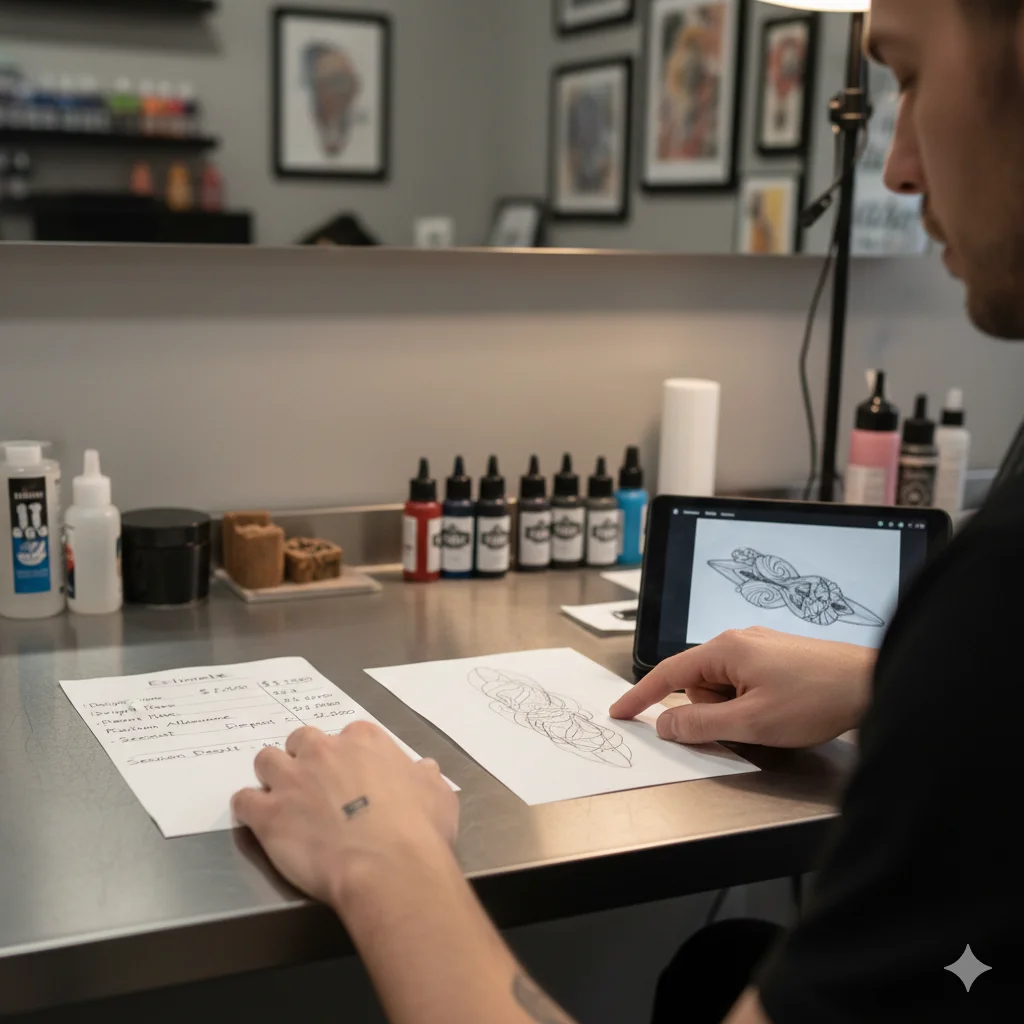
Brooklyn studios typically require consultations for larger arm work. Deposits secure your appointment time. Multiple sessions spread across weeks or months complete full sleeves. Healing time between sessions ensures quality results.
At Here Tattoo, we guide clients through the entire process. We discuss style options during initial consultations. We plan placement and sizing carefully. We schedule sessions to allow proper healing between appointments.
Key Takeaways
- Japanese, realism, traditional, and geometric styles perform best on arms
- Upper arms suit wraparound designs while forearms favor elongated work
- Bold lines and high contrast age better than fine details
- Plan standalone pieces with potential future expansion in mind
- Match your desired style to an artist who specializes in that approach
- Consider visibility needs based on your lifestyle and career
- Arm shape and movement should influence your style choice
Conclusion
Choosing the right arm tattoo style involves balancing aesthetics with practical considerations. Your arm's shape, your lifestyle, and your long-term goals all influence the best choice. Understanding how different styles interact with arm anatomy leads to better decisions.
Here Tattoo specializes in helping Brooklyn clients find their perfect arm tattoo style. We combine artistic expertise with technical knowledge of how designs age and move on skin. Our collaborative approach ensures your vision translates into lasting body art.
We invite you to schedule a consultation to explore arm tattoo possibilities. Bring your ideas, references, and questions. Together, we will design an arm tattoo that looks stunning today and decades from now.
FAQs
What is the most popular tattoo style for arms?
Traditional and neo-traditional styles remain the most popular arm tattoo choices. Their bold lines and saturated colors suit the arm's visibility perfectly. Japanese sleeves also rank highly for clients wanting larger coverage.
Do fine-line tattoos work well on arms?
Fine-line tattoos work well on arms, especially on flatter forearm areas. However, they require more maintenance over time than bolder styles. The inner forearm provides the best canvas for delicate fine-line work.
How do I choose between upper arm and forearm placement?
Consider visibility preferences and design style when choosing placement. Upper arms hide easily and suit wraparound designs. Forearms show more often and work better for elongated or text-based pieces.
Will my arm tattoo distort when I move?
Some distortion occurs naturally with arm movement. Designs placed away from joints experience less distortion. Organic, flowing styles handle movement better than rigid geometric patterns.
How long does a full arm sleeve take to complete?
Full sleeves typically require multiple sessions over several months. Total time depends on design complexity and your healing speed. Most sleeves need between 15 to 40 hours of tattooing spread across sessions.
What arm tattoo styles age the best?
Traditional, neo-traditional, and bold blackwork styles age best on arms. Their thick lines and high contrast maintain clarity for decades. Fine details and light colors require more maintenance over time.
Should I plan my arm tattoo for future expansion?
Planning for potential expansion is always wise. Leave space around standalone pieces if you might add more later. Discuss long-term possibilities with your artist during the initial consultation.